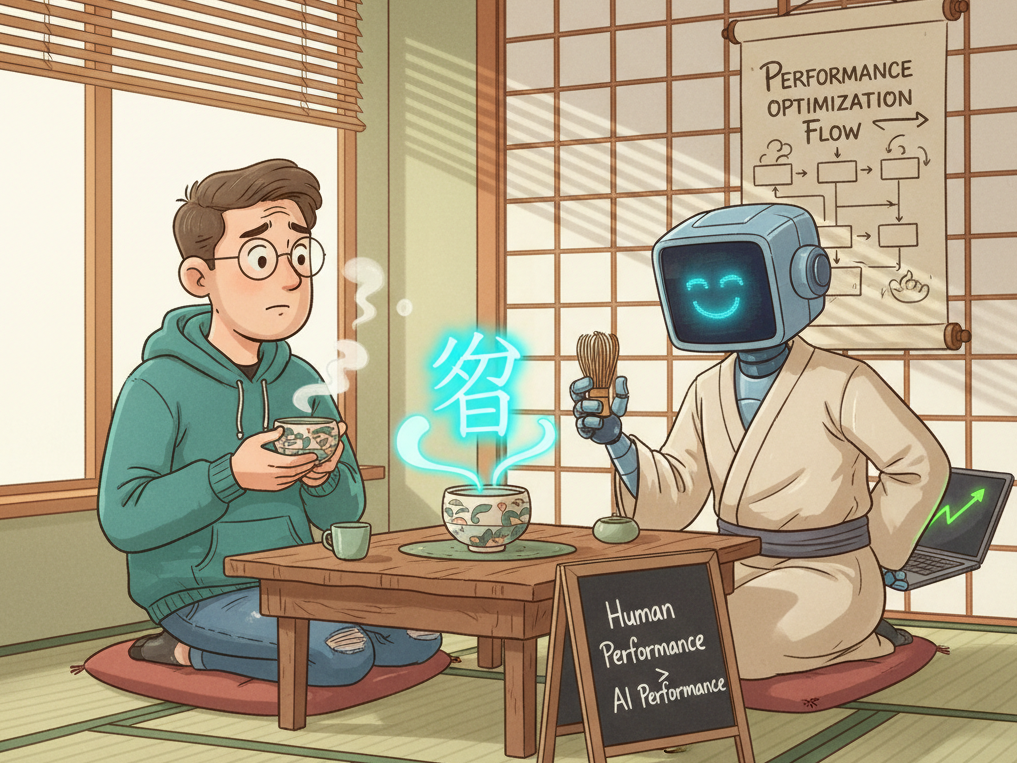

How a 400-Year-Old Tea Ceremony Predicts the Future of UX – Taishi Okano‘s analysis of the tea ceremony interprets UX as a philosophical practice, focusing on intentional friction… While Okano treats this as a way to manage user attention, a more structural view treats the design system as a governance layer that enforces operational constraints to optimize human performance in an AI-driven environment.
A new governance layer is the framework moving forward for design systems, especially for deterministic-AI behind frontend design. I’m not just talking chatbot, the distinction is important for agentic flows (https://lnkd.in/db2jVVfv). The introduction of Figma’s Code Layers and parameterized shaders on June 24, 2026 directly aligns the tool with the core tenets of the parametric movement: treating logic, code, and variables as usability requirements.
As UX designers become UX curators of the frontend code layer we must pivot from pure interface craft: make it usable, delightful, get work done into governance craft, as well as, an ethical stance that puts rails between people and AI dark UX practices or lack of accessibility oversight, and even contribute to legislation for usability standards.
If our goal is to stay faithful to real user adoption and design thinking while hardcoding design rules and conditions into the Figma canvas then the concrete shift is to turn principles into enforceable interfaces and system behaviors that align with user goals that are immutable. UX designers focus more on AI orchestration – the governance layer that lives in the design system, while product teams focus on business innovation. UX must encode constraints (so that the user can … when this happens… etc.) into the output code layer (Figma now allows for prompts and instructions for the model to compile components and states). This requires deep understanding of UX and userflow design for the most efficient tasking – calling the wrong code is expensive, not just hard to use.
One of the first steps is to close the divide between engineering and UX design, they can be one unified force multiplied over several verticals now. Product can then fully engage with innovation and business development without the burden of managing design deliverables, constant iterations, sprint velocity and design pivots, which are handled directly with engineering.