Client: American Bureau of Shipping (ABS) Oct. 2024 – July 2025 Role: Lead Product Designer – Systems Architecture, UX strategy – research, prototyping Team: Offshore Designer, Unity Developers, Product Manager, Subject Matter Experts Tools: Figma, Unity integration, modular design libraries
Project Summary
At ABS, I transformed an Integrity Management System into a research-driven trustworthy system that cut task time.
I reframed the system around inspector workflows (Evaluate, Strategize, Plan), delivered interactive prototypes, and created ABS’s first UX standards hub in Confluence. These improvements didn’t just speed up workflows, they lowered operator error, making vessel inspections safer. I left the Unity team with a research-backed framework they could scale beyond my engagement.
Transformed a CAD-style prototype into a modular, card-based command center. The layout empowered inspectors to evaluate corrosion, plan repairs, and manage resources with greater accuracy and speed. Beyond the redesign, I established ABS’s first UX Standards Confluence space, centralizing guidelines, templates, and component libraries, which provided a scalable foundation for design maturity and future product development.
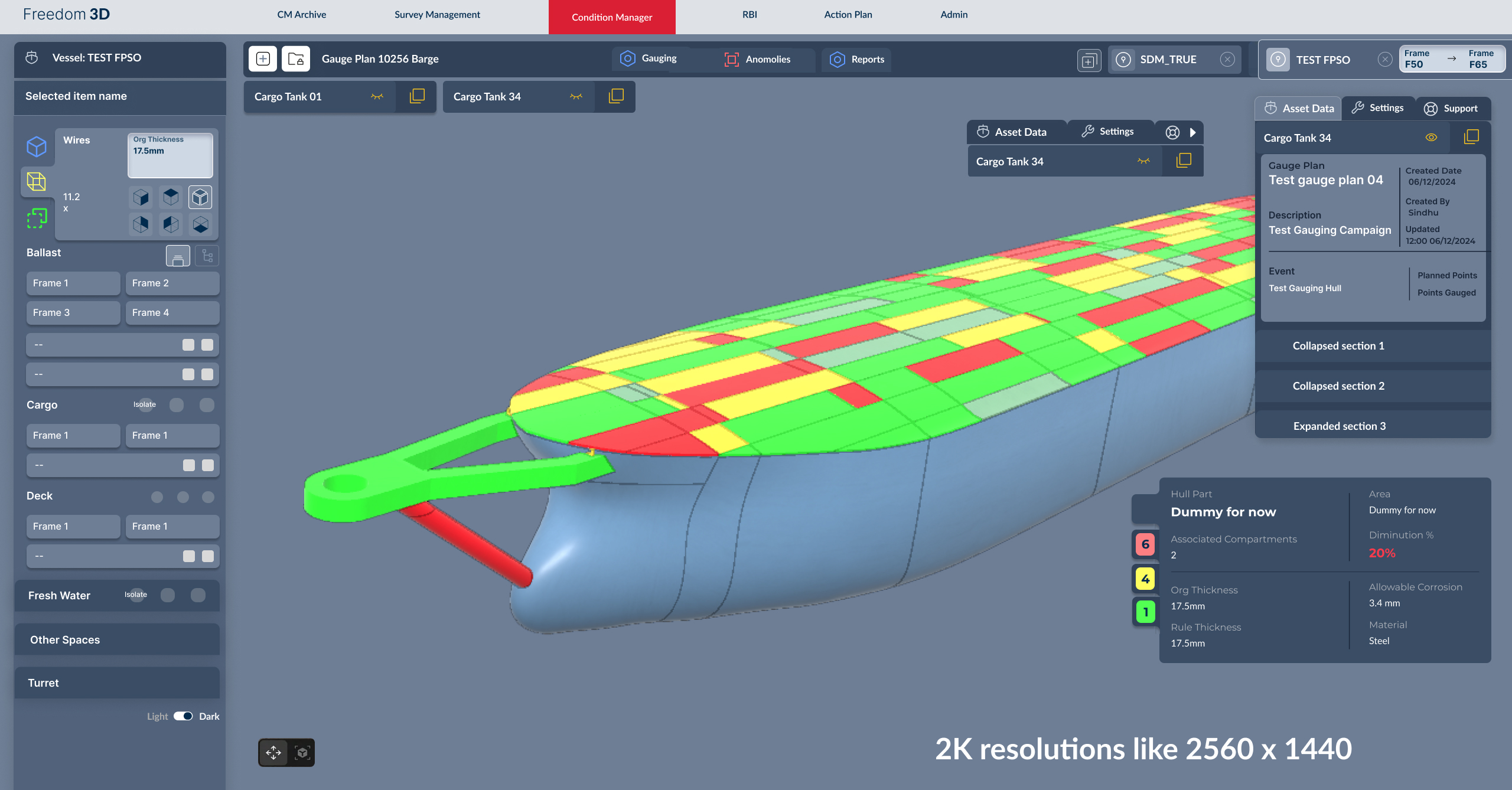
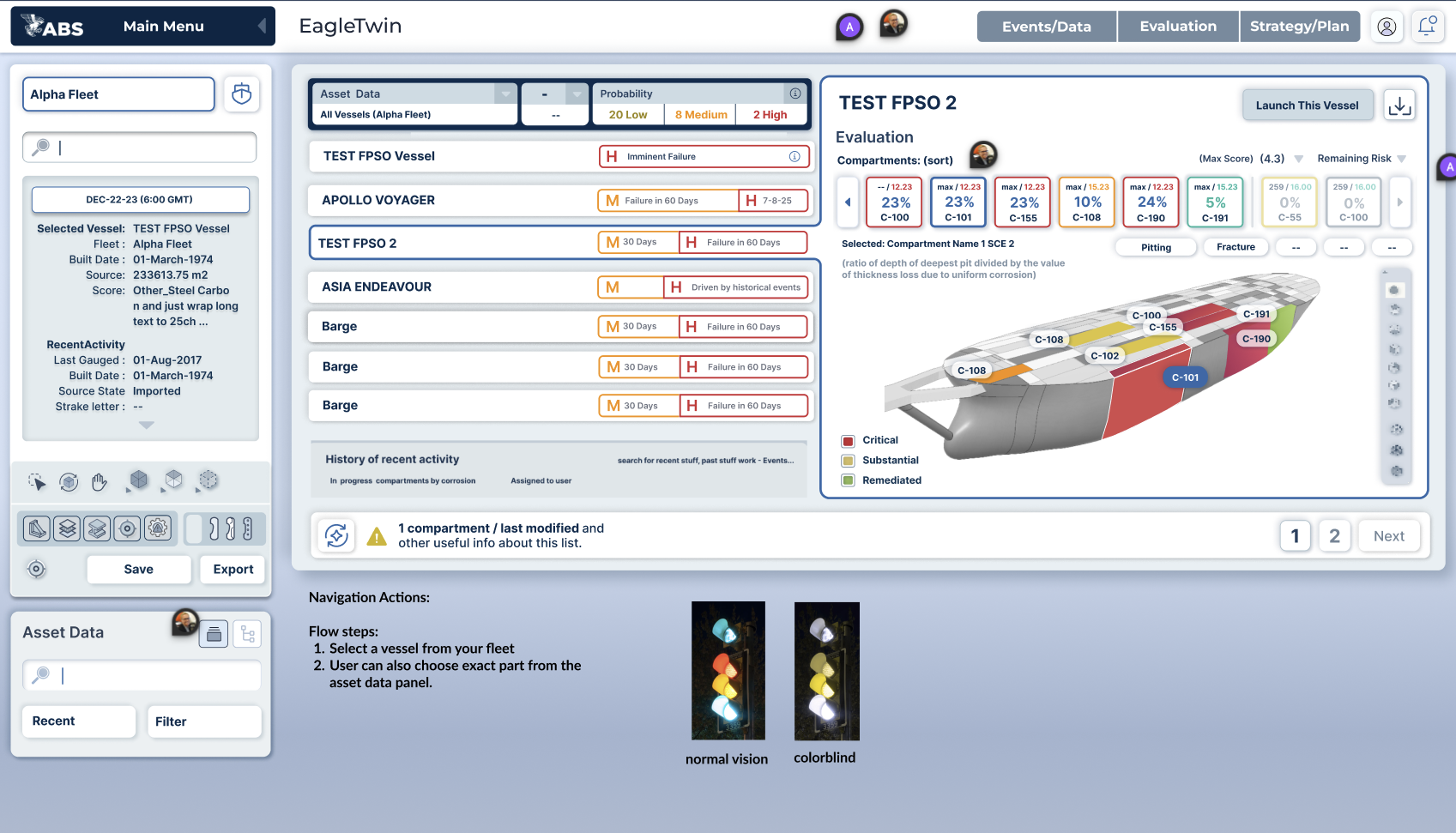
Complete System Integration: Final implementation showing the full vessel integrity management system with all components integrated: 3D vessel model, inspection workflows, data analysis, repair planning, and contractor coordination. This represents the successful transformation from CAD-style complexity to user-centered design.
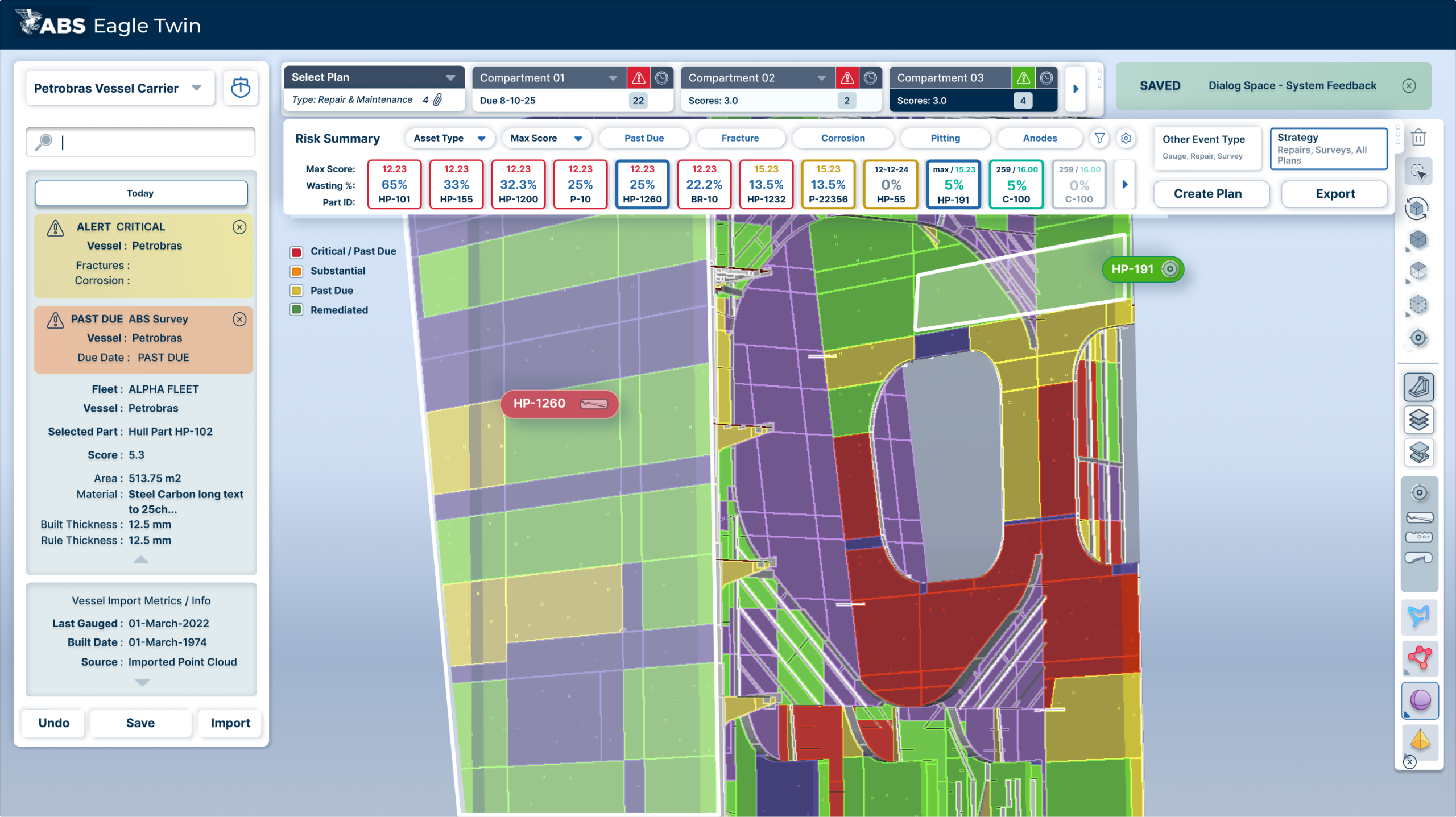
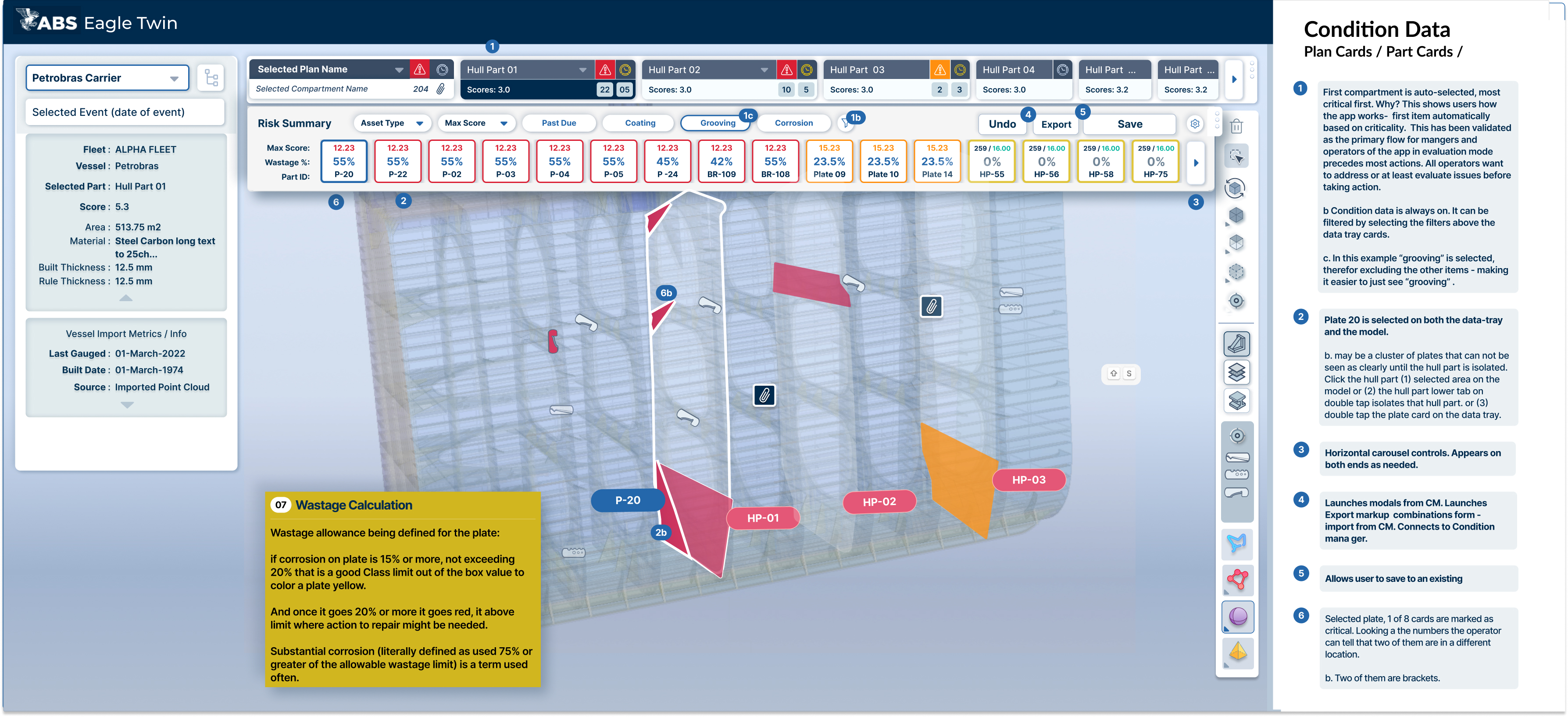
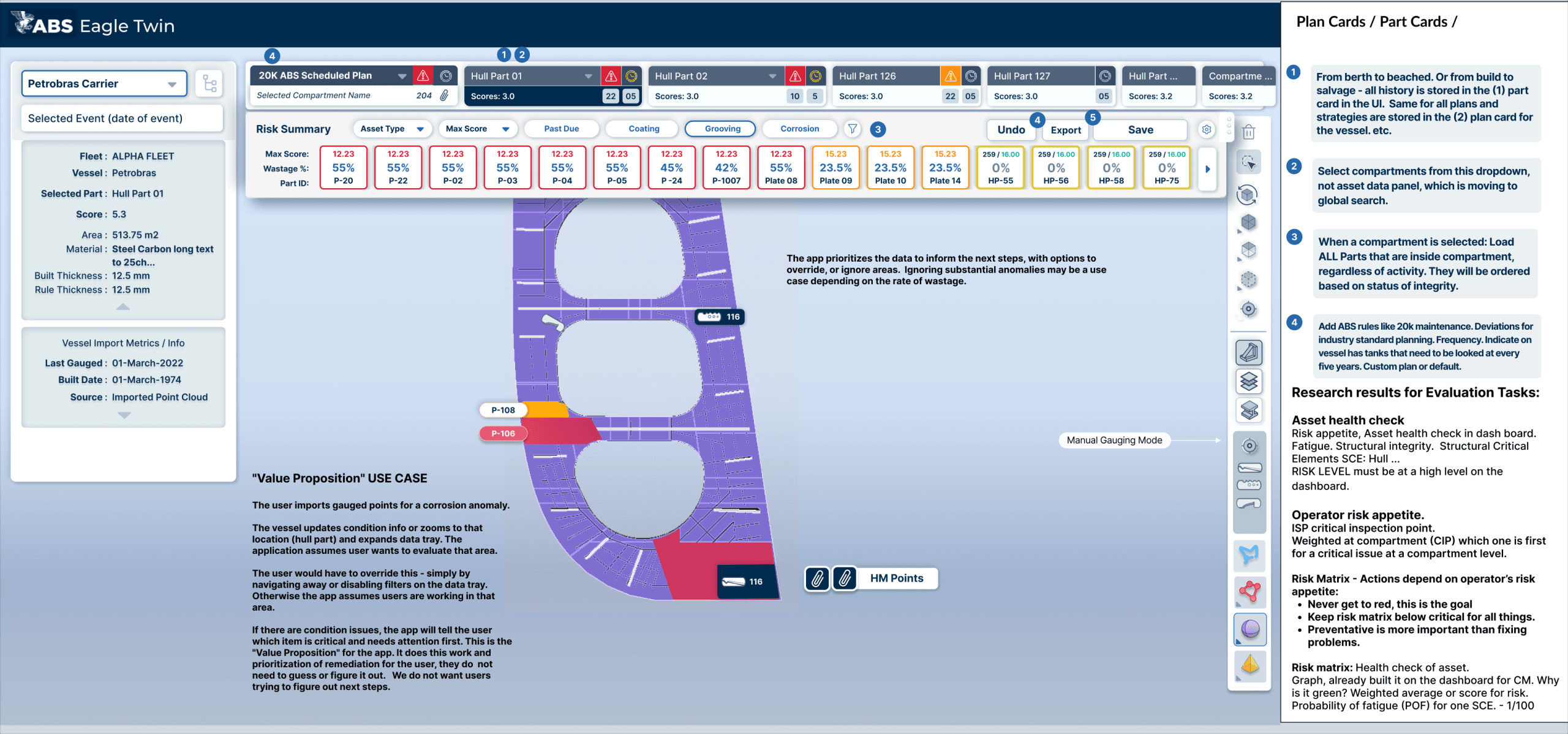
Dashboard Overview: The redesigned IMS interface showing the main vessel inspection dashboard with prioritized condition issues, 3D vessel model integration, and modular card-based layout. Key features visible include severity-based color coding (red to green), contextual data panels, and streamlined navigation that reduced clicks from 7+ to 2 maximum.
Key Challenges
Original CAD-Based Problem
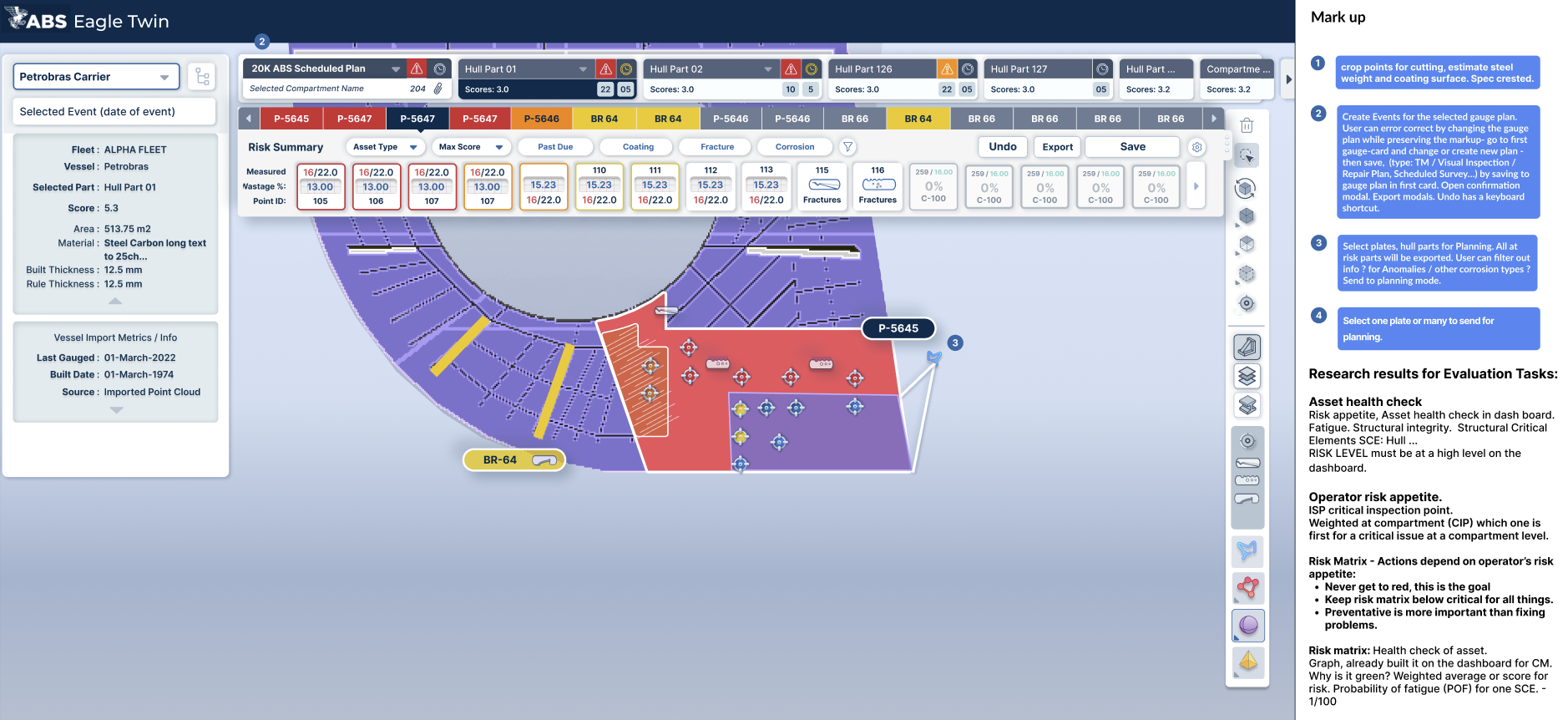
Inspectors needed to identify corrosion, record thickness readings, mark issues for repair, and export them in order of severity.
The old flow was built like a CAD program. It forced inspectors to dig through data trees and manipulate the vessel just to log thickness points. Inspectors spent more time navigating menus than inspecting vessels, some tasks required 7+ clicks just to log a single thickness reading.
User-Centered Solution
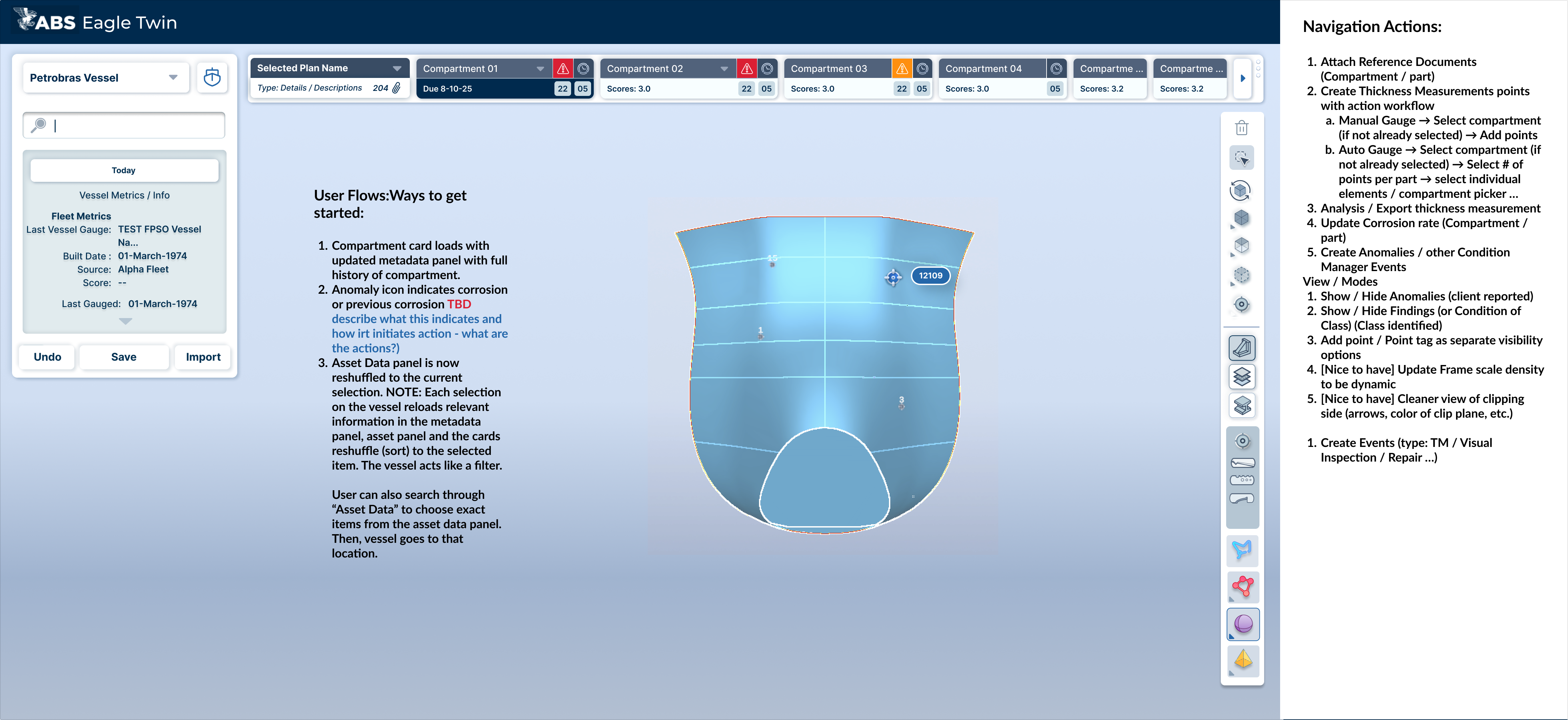
Selecting a point on the vessel also showed it in the panel tray. This kept vessel data and related inspection info together. Core actions were always one or two clicks away, cutting navigation complexity and building trust.
The root problem was that the system had been designed by CAD experts for CAD workflows, not IMS operators. My challenge was to bring the interface in line with how inspectors actually worked.
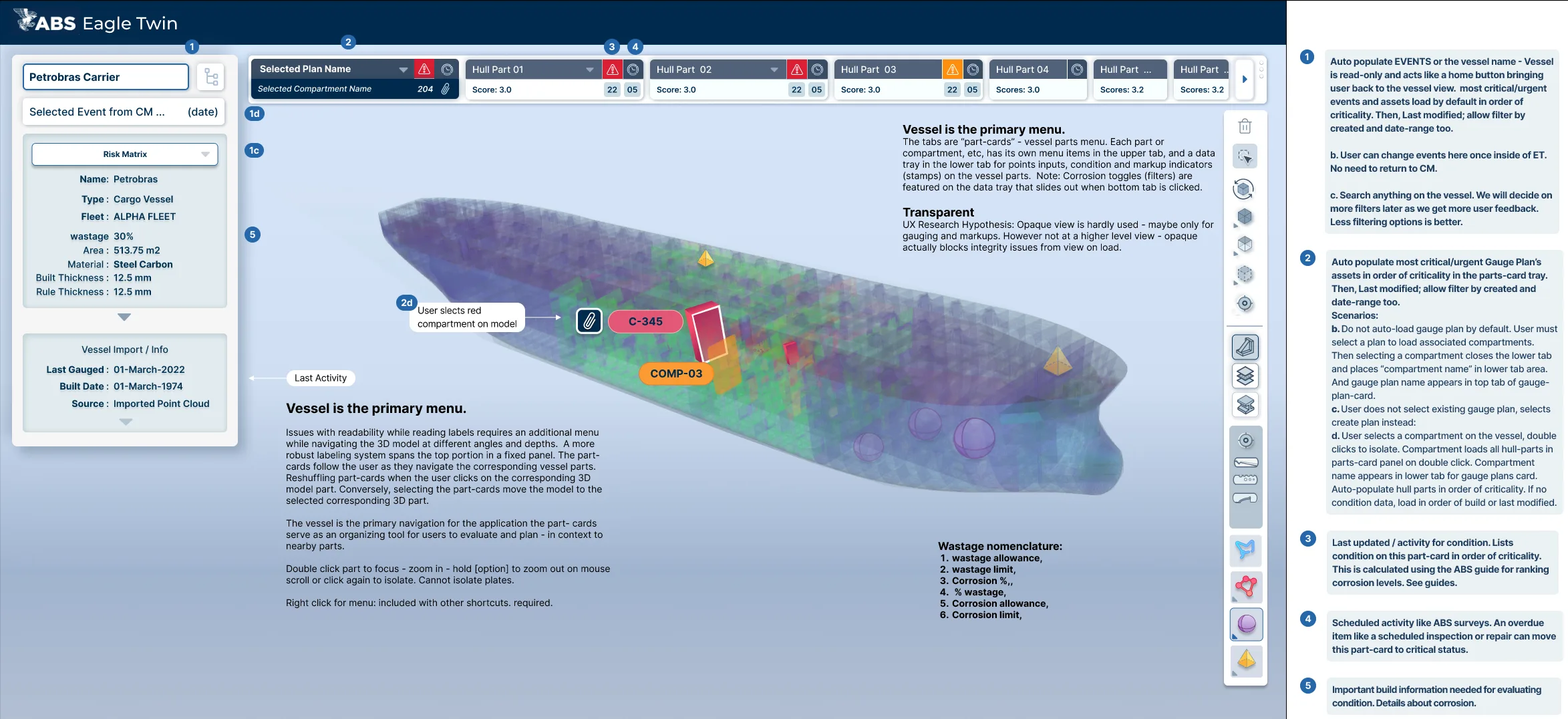
Initial Wireframe Concept: Early design exploration showing the 3D vessel model with integrated inspection panels. This wireframe demonstrates the transition from CAD-style data trees to contextual information display around the vessel model.
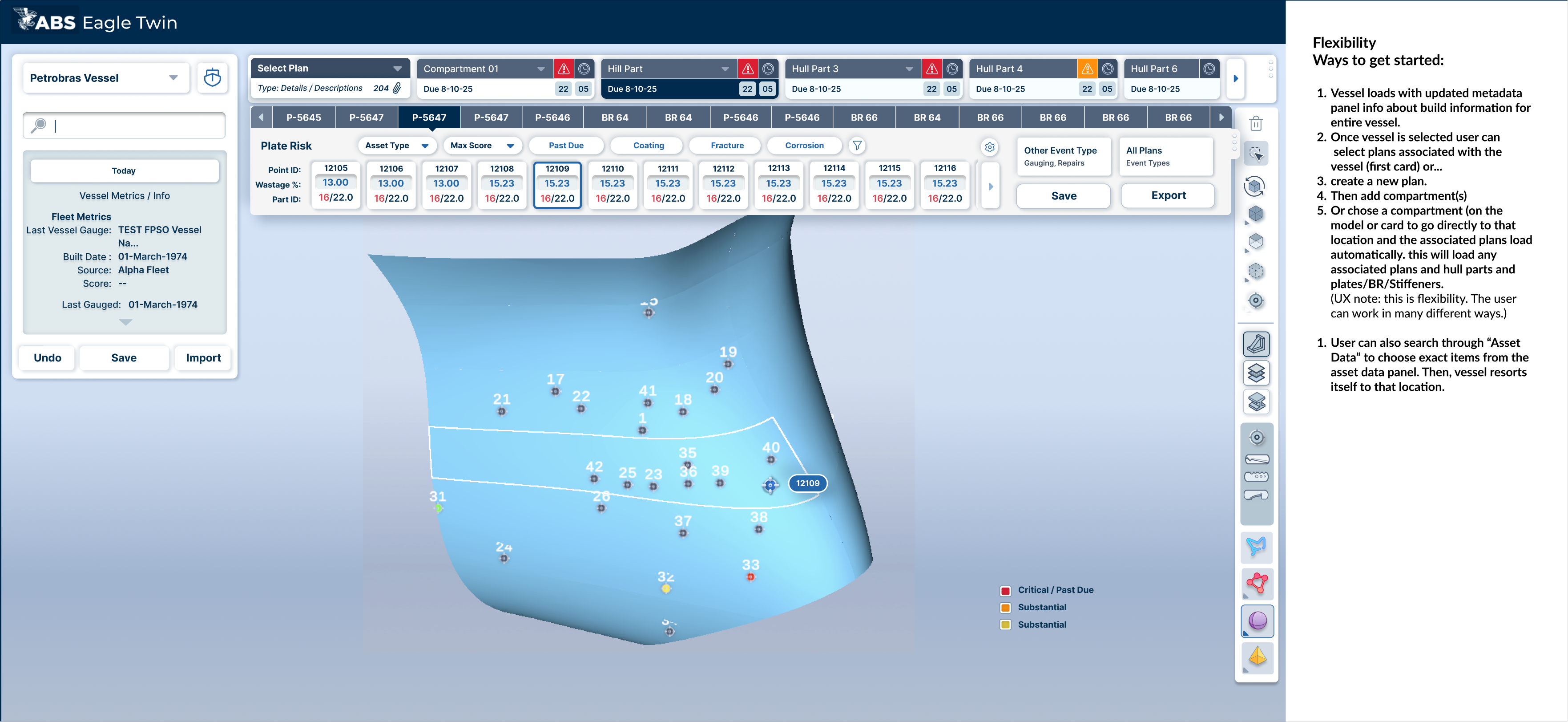
Full Interface Wireframe: Complete wireframe showing the relationship between 3D vessel visualization and inspection data panels. Notable features include contextual information display, simplified navigation, and integrated thickness measurement tools.
Solution Overview
The redesign centered on visual clarity, critical in technical systems where inspectors must quickly interpret large amounts of data. Through discovery workshops with subject matter experts (SMEs), we confirmed that real IMS operators follow three core workflows: Evaluate, Strategize, Plan.
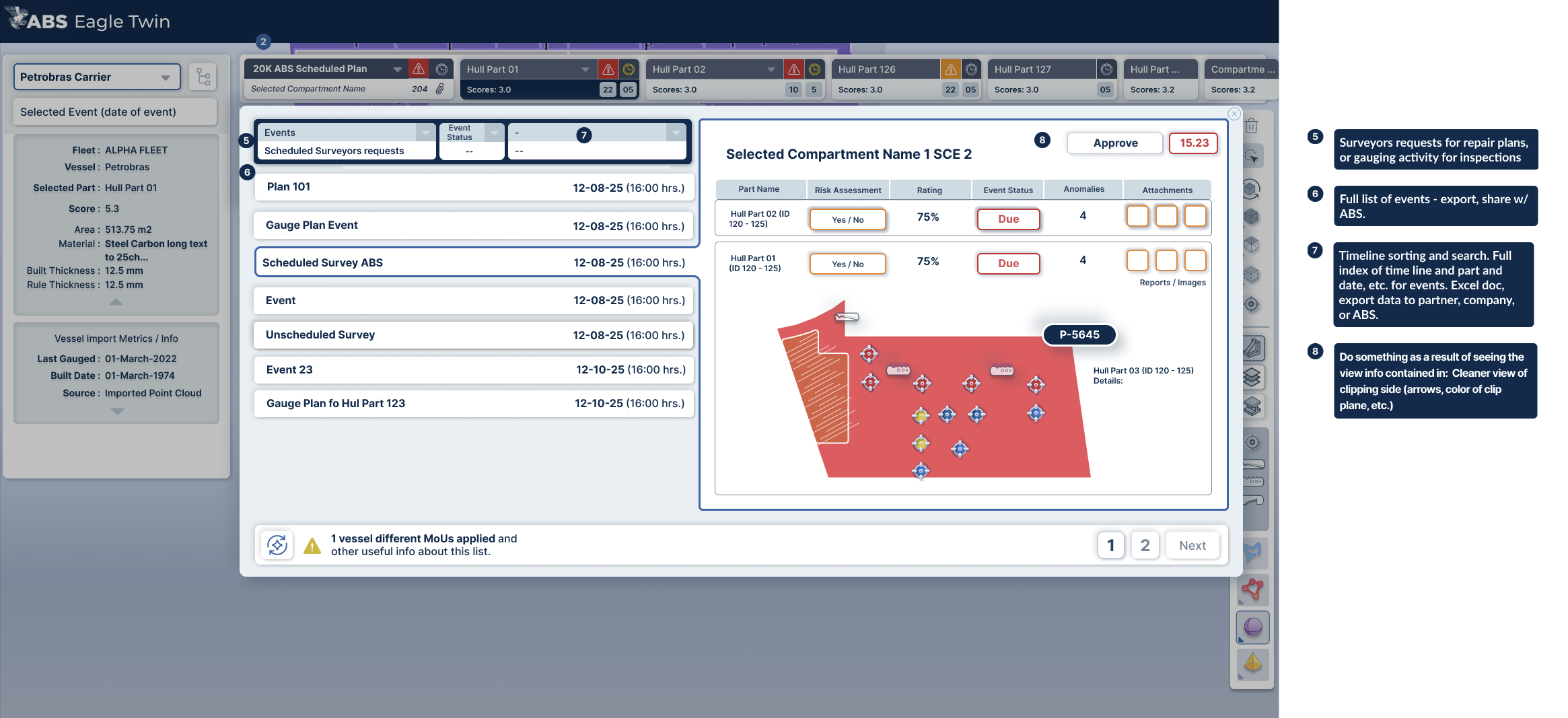
Evaluate: Inspect vessel condition, import photos, review history, and compare build info (metal type, thickness, etc.). Strategize: Use inspection data to decide between immediate remediation or long-term planning. Better insights during evaluation lead to smarter, cost-saving strategies. Plan: Mark repairs on the vessel model, prepare panels for gauging, and export repair plans to contractors.
The redesigned dashboard organized condition issues by severity, with inline system feedback aligned to ABS corrosion guidelines. Instead of getting lost in CAD-style data trees, operators could see anomalies in context and act faster.
The 3D vessel model remained central, but I built an interface around it: modular cards, severity-based prioritization, and AI-driven prompts connected data to ABS standards.
Key UX Solutions
Domain-specific innovation: Designed around how shipowners think and act, not CAD conventions.
Research-driven adoption: By reframing UX as productivity + accuracy, ABS stakeholders embraced design maturity.
Scalable foundation: The Evaluate, Strategize, Plan model continues to inform ABS’s ongoing digital transformation.
Gauging metal thickness is at the core of integrity data outputs.
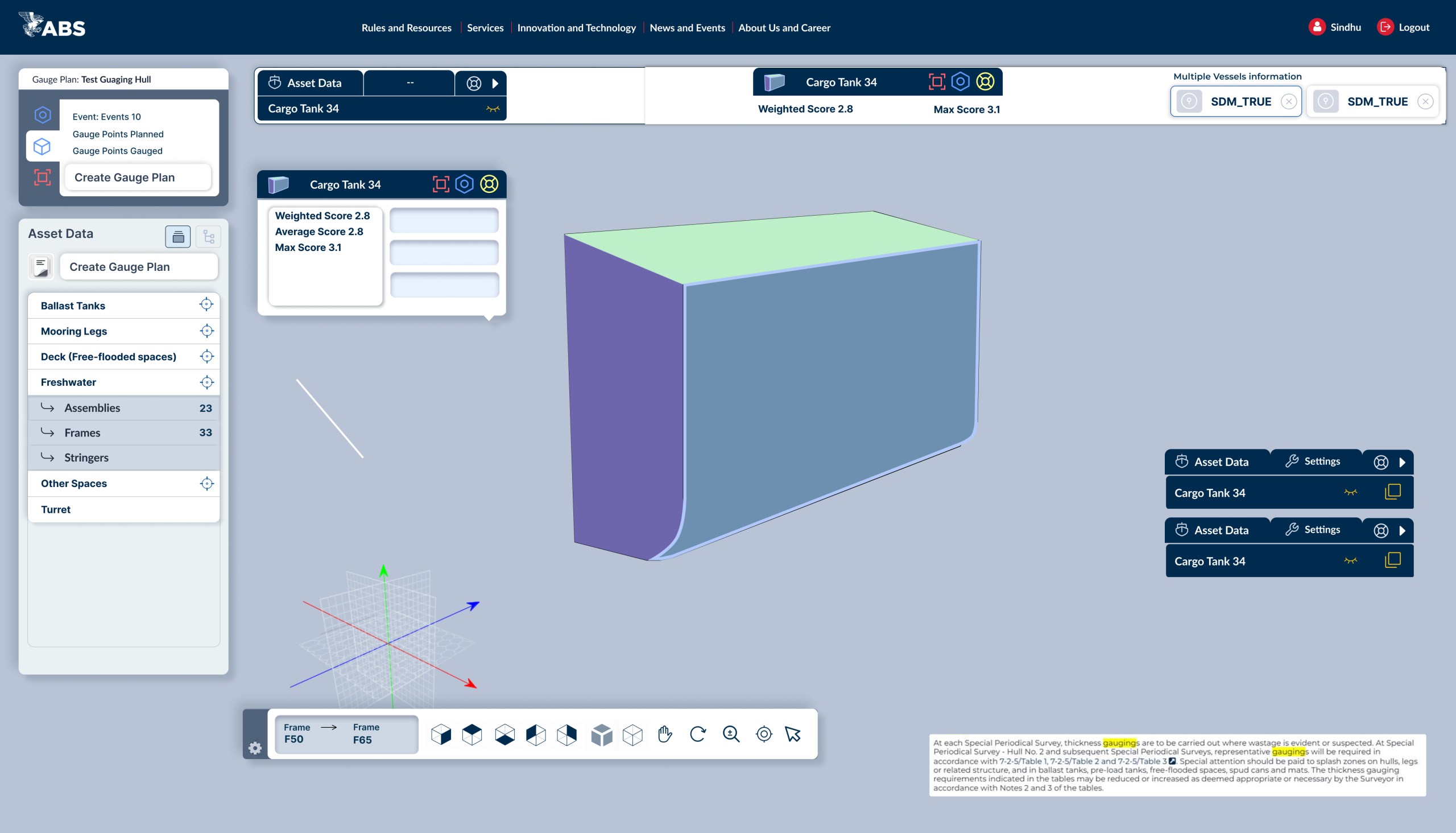
Thickness Measurement Interface: Detailed view of the metal thickness measurement interface showing how inspectors input gauge point data. Features streamlined data entry, contextual vessel information, and immediate feedback on thickness readings relative to safety standards.
Severity Visualization: Vessel section showing thickness measurement points with color-coded severity indicators. Red areas indicate critical corrosion requiring immediate attention, while green areas show acceptable thickness levels. This visual system replaced complex data trees with intuitive color coding.
Research
The research phase focused on understanding real inspector workflows and aligning the design with operator needs rather than CAD conventions. I partnered closely with the Unity team (3D model rendering) and SMEs to ground the product in jobs-to-be-done (JTBD), using interviews, workshops, and competitive analysis to validate the approach.
Mental Models
The existing system mimicked CAD software, with data trees on one side and tools on the other. For inspectors, many of whom had never touched CAD, this flow was confusing and error-prone. They needed a tool for vessel integrity, not 3D modeling.
Key Findings
Operators think in workflows, not layers. Their process is Evaluate, Strategize, Plan.
Two user types emerged: Administrators (off-vessel) and Captains (on-vessel).
Modular, contextual data cards worked as anchors, keeping information visible and reducing navigation complexity.
Criticality-based ordering (most urgent issues first) helped inspectors prioritize repairs and trust the system’s guidance.
This reframing allowed users to stay in “flow state” entering data, reviewing history, and planning repairs without losing context. These findings were confirmed and refined through ongoing SME interviews and operator testing.
Evaluation
Evaluation Workflow: Interface showing the vessel condition evaluation process. Inspectors can import photos, review historical data, compare build specifications,
and mark areas for detailed inspection. The interface maintains context by showing vessel location, metadata, and inspection history in connected panels.
Detailed Evaluation View: Comprehensive evaluation interface showing how inspectors enter detailed inspection data while maintaining
visual context with the 3D vessel model. Features include photo integration, historical comparison data, and immediate validation feedback.
Strategy
Strategic Planning Interface: Maintenance strategy workflow showing how inspectors and fleet managers plan long-term vessel maintenance. Interface displays cost analysis, time-based deterioration projections, and repair scheduling tools integrated with inspection data.
A critical insight emerged: shipowners sometimes need to override the system’s recommendations.
Why? Not all “critical” corrosion requires immediate action. Some rust appears severe but shows no deterioration over time, while other areas worsen rapidly. Experienced inspectors know the difference.
The Design Challenge: How do we build an AI-driven system that provides intelligent recommendations while respecting operator expertise?
The Solution:
• System flags issues by severity based on ABS standards
• Operators can override recommendations with justification
• Interface requests confirmation and documents reasoning
• Historical data shows deterioration rates to inform decisions
This approach builds trust through transparency—operators evaluate AI outputs rather than blindly following them. As trust grows, the system becomes a collaborative tool, not a black box.
Key UX Principle: For AI-driven interfaces to succeed, user trust must remain paramount. Operators need to verify AI accuracy, which is far less taxing than making decisions from scratch.
Planning Workflow: Repair planning interface showing how inspectors coordinate with contractors and manage repair schedules. Features include repair prioritization, contractor communication tools, and integrated project management capabilities.
Planning
Integrated Planning Dashboard: Complete planning interface showing the integration between 3D vessel visualization and repair coordination tools. Inspectors can mark repairs directly on the vessel model and generate detailed work orders for contractors.
Technical Implementation Guide: Development specifications showing detailed technical requirements for implementing the vessel inspection workflow. Includes state management, error handling protocols, and integration guidelines for Unity developers.
Impact
Organizational Maturity: Shifted ABS’s perception of design from superficial styling
to risk management and operational efficiency, establishing UX as a critical discipline.
Scalable Foundation: Delivered ABS’s first UX standards hub in Confluence, capturing principles, accessibility guidelines, and reusable components that became a blueprint for Unity developers and future product work.
Measurable Results
• 40% reduction in inspection time
• Task success improved from 60% to 90% on first attempt
• Navigation simplified from 7+ clicks to 2 maximum
• Quantifiable decrease in operator error rates
Error Reduction & Safety: Lowered operator error rates by simplifying workflows and
embedding inline system feedback, directly improving inspection safety and trust in results.
Takeaway
This project demonstrated that design isn’t just about usability, it’s about risk reduction, operator trust, and efficiency in high-stakes systems. By reframing workflows around real inspectors, providing developers with clear blueprints, and establishing scalable UX standards, I helped ABS move from failed prototypes to a system that reduced errors, improved safety, and gained stakeholder confidence. These are the same principles I bring to mission-critical environments like autonomous trucking, where trust and efficiency are non-negotiable.
This work proved that design isn’t decoration—it’s risk reduction, operator trust, and efficiency in high-stakes systems.
As the Principal Systems Architect and Founder of Raibach IDS, I design Agile-based AI-lifecycle and observability software, making them usable, defining what "correct" behavior is, designing the evaluation criteria and failure modes, deciding where and how a human supervises, overrides system's decisions.
By applying foundational design systems thinking to implement this AI Execution Harness, we can cut operational overhead, and make development faster, cheaper, and more collaborative.