
Client: American Bureau of Shipping (ABS)
Timeline: April 2025
Role: Product/UX Designer – strategy, design, validation
Tools: Figma, design system libraries, prototyping frameworks
Project SummaryThe goal: design a paid SaaS version with targeted features to deliver measurable value, justify subscription pricing, and save operators up to 35% time depending on port conditions. Shipowners need to be ready when they arrive at port to avoid detainment, which can be costly. ABS already offered a free version of a generic checklist for all sections of a vessel. But their new go-to-market plan for paid subscriptions needed a robust B2B SaaS application with real benefits to justify the extra charges. How can we give operators an upper hand in deciding which vessel to address first and which items are most urgent? The Problem Only 20% of operators used the free tool from all ABS vessel owners, with most printing out PDFs of generic checklists and doing the entire list regardless of urgency, wasting significant time to avoid detainment costs averaging $15k/day. Solution Overview Risk-based prioritization: High-risk items surfaced first (e.g., corrosion in older vessels). |
Outcomes (Early Validation)Inspection prep time: Avg dropped from 43 min to 28 min (−35%). Design ProcessWireframing: sketched dynamic dashboards with customizable checklists. |
|
New go-to-market plans (legacy was a free version with no customization or benchmark performance.)
|
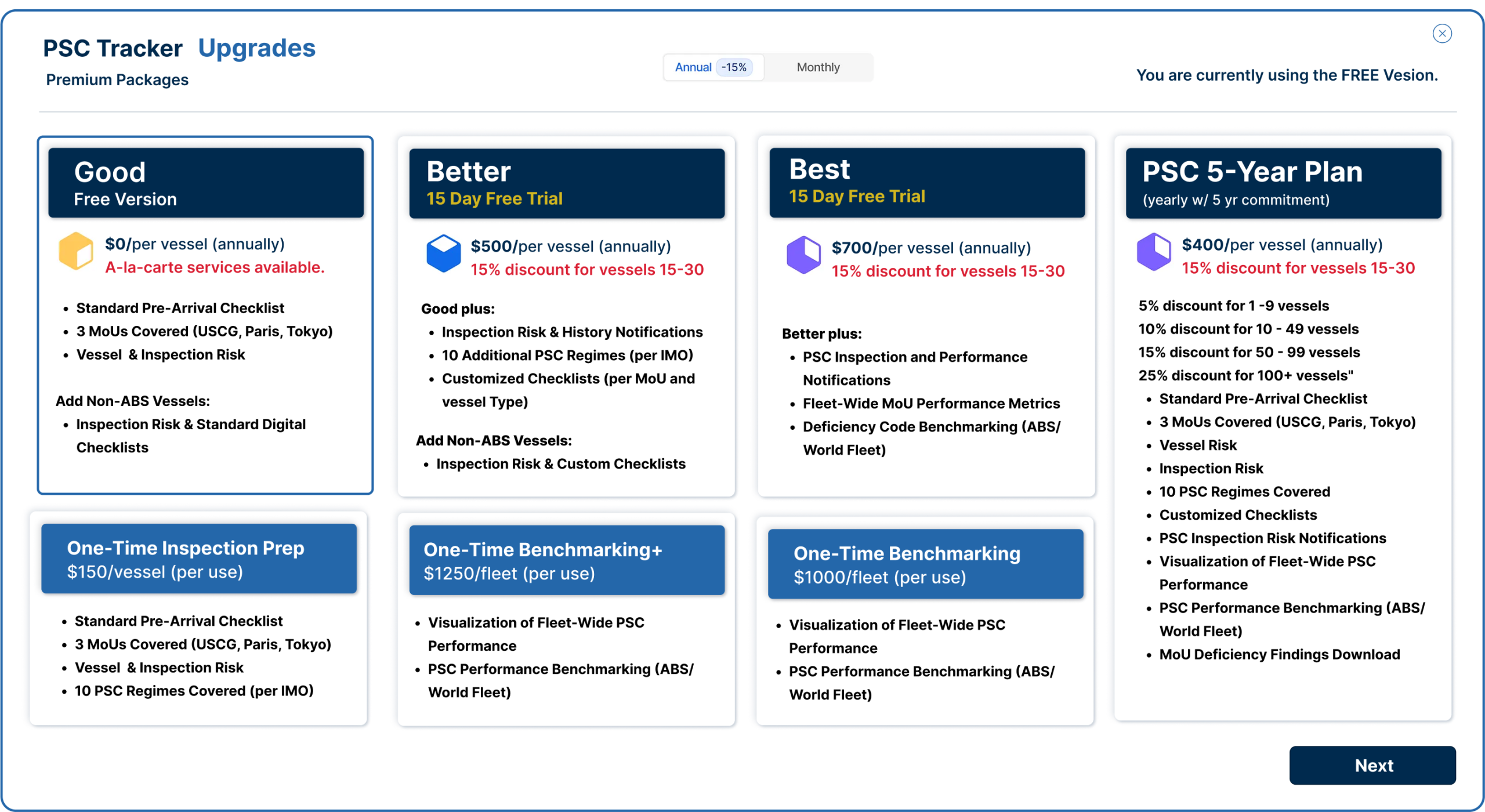
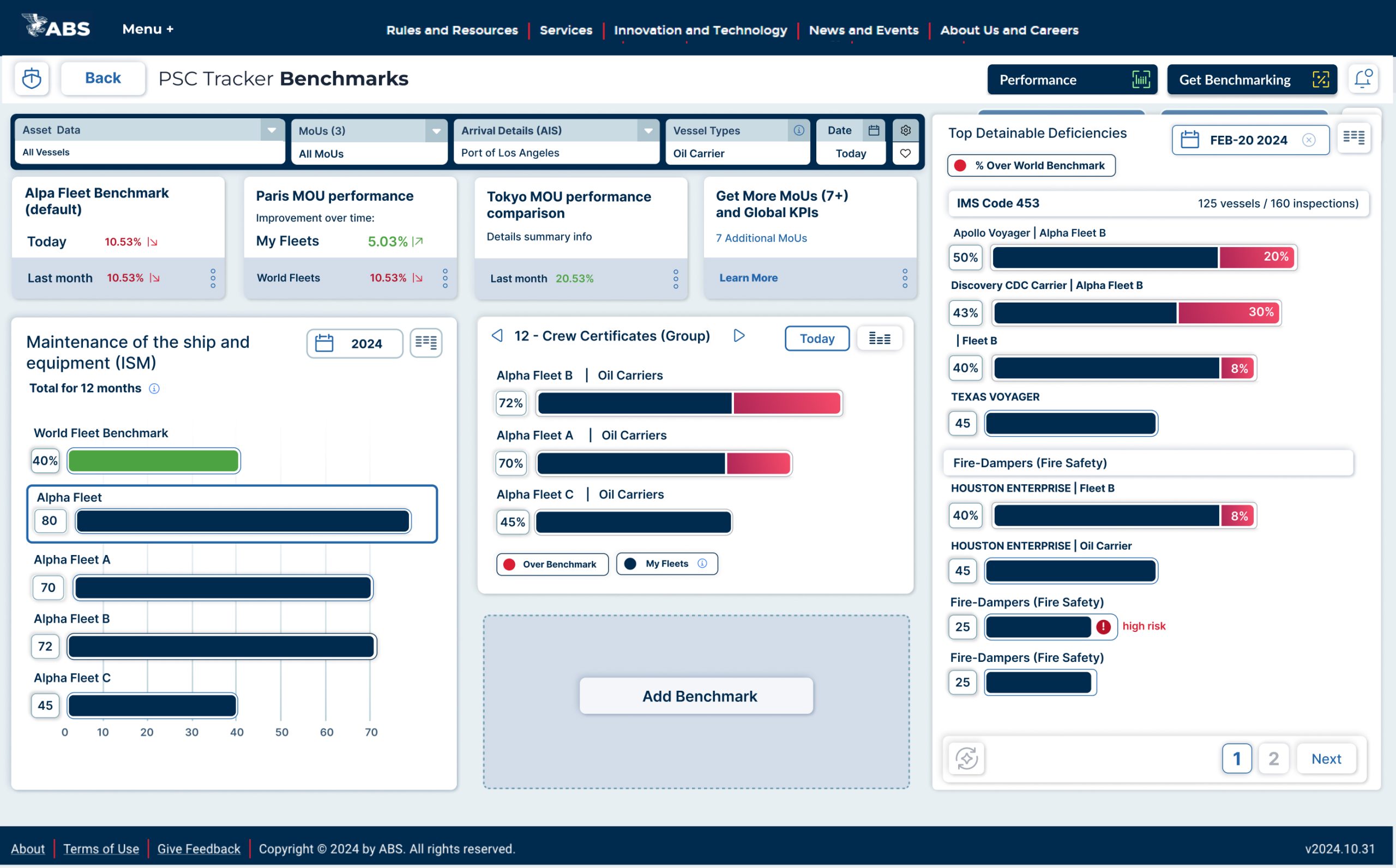
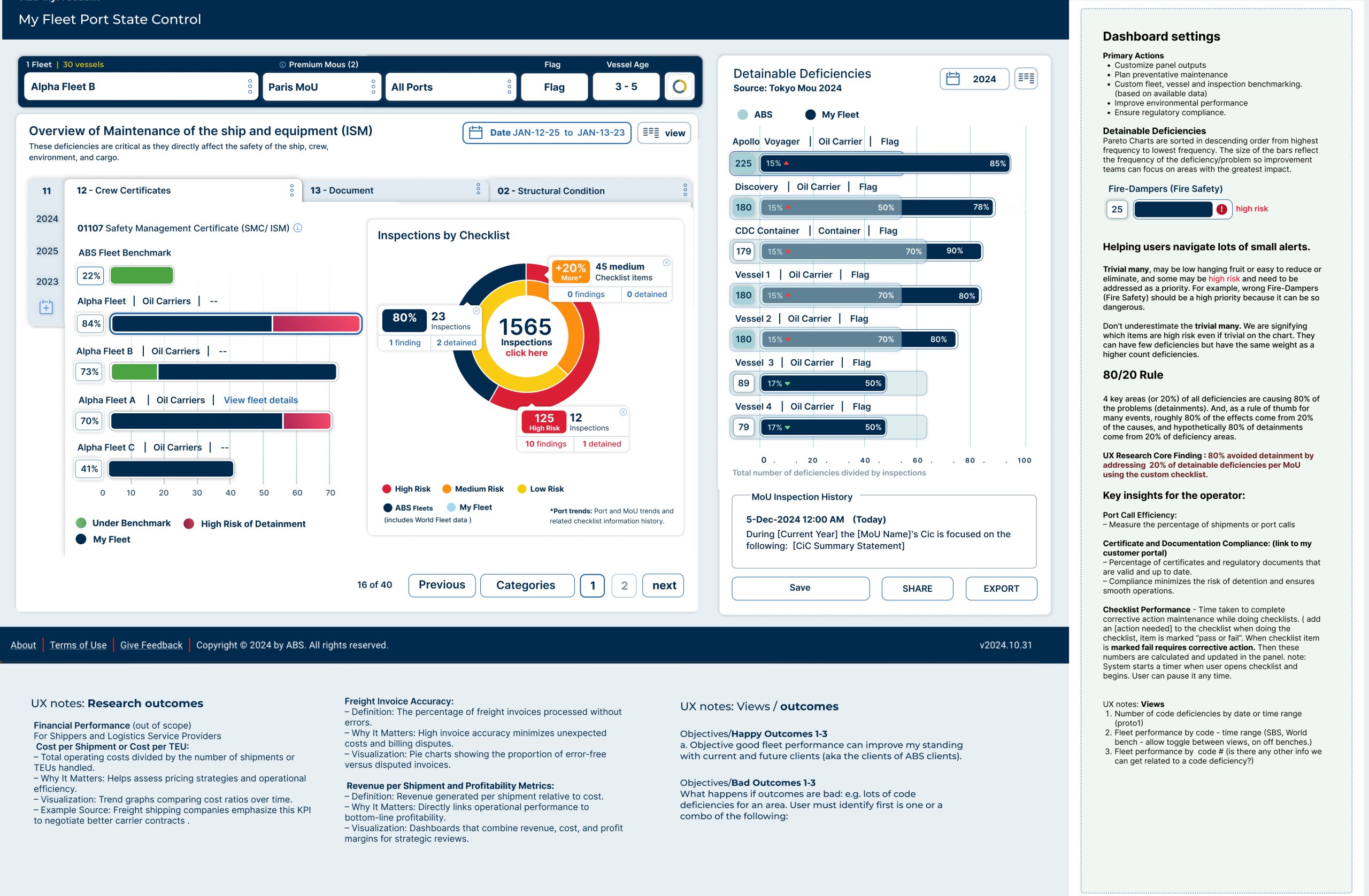
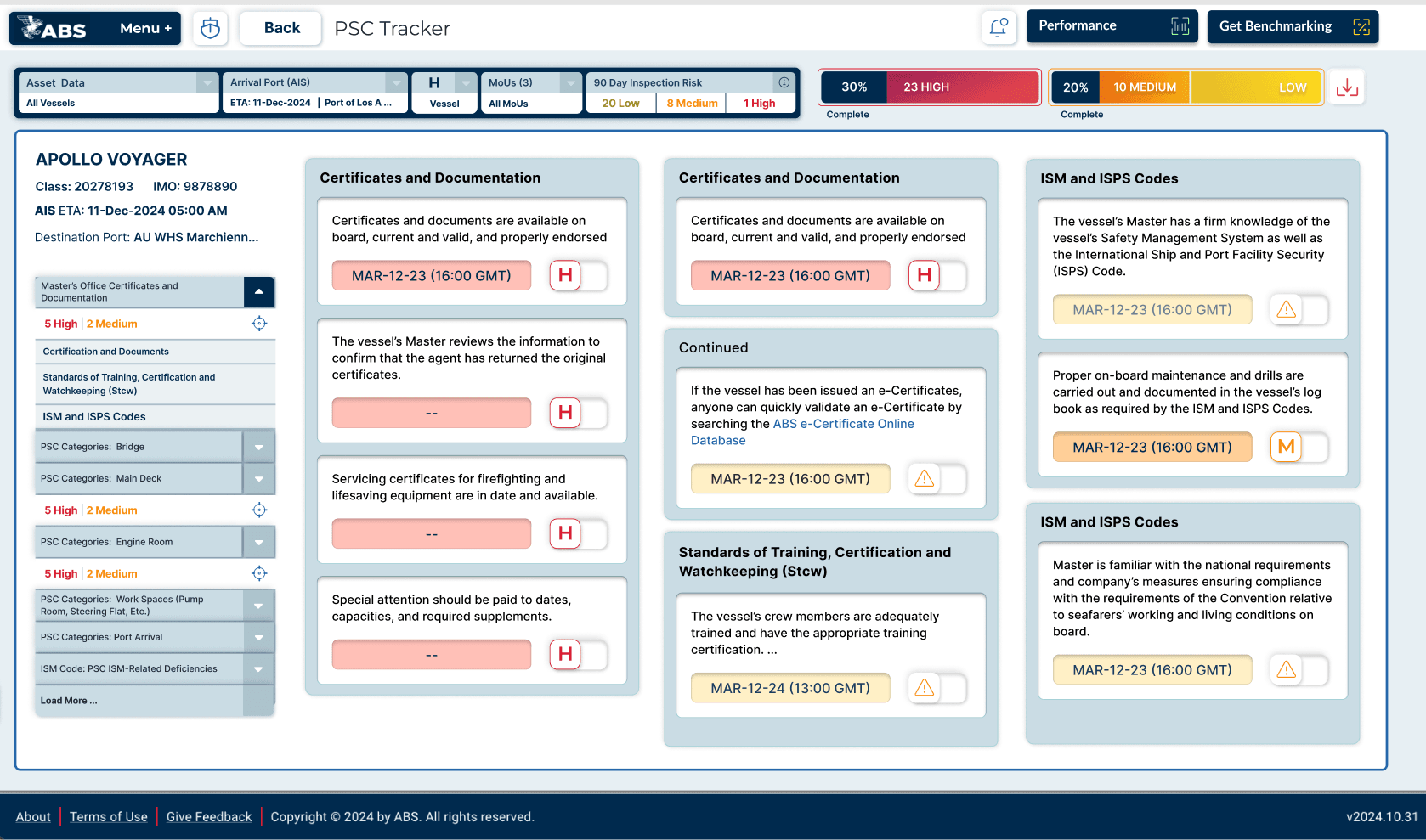
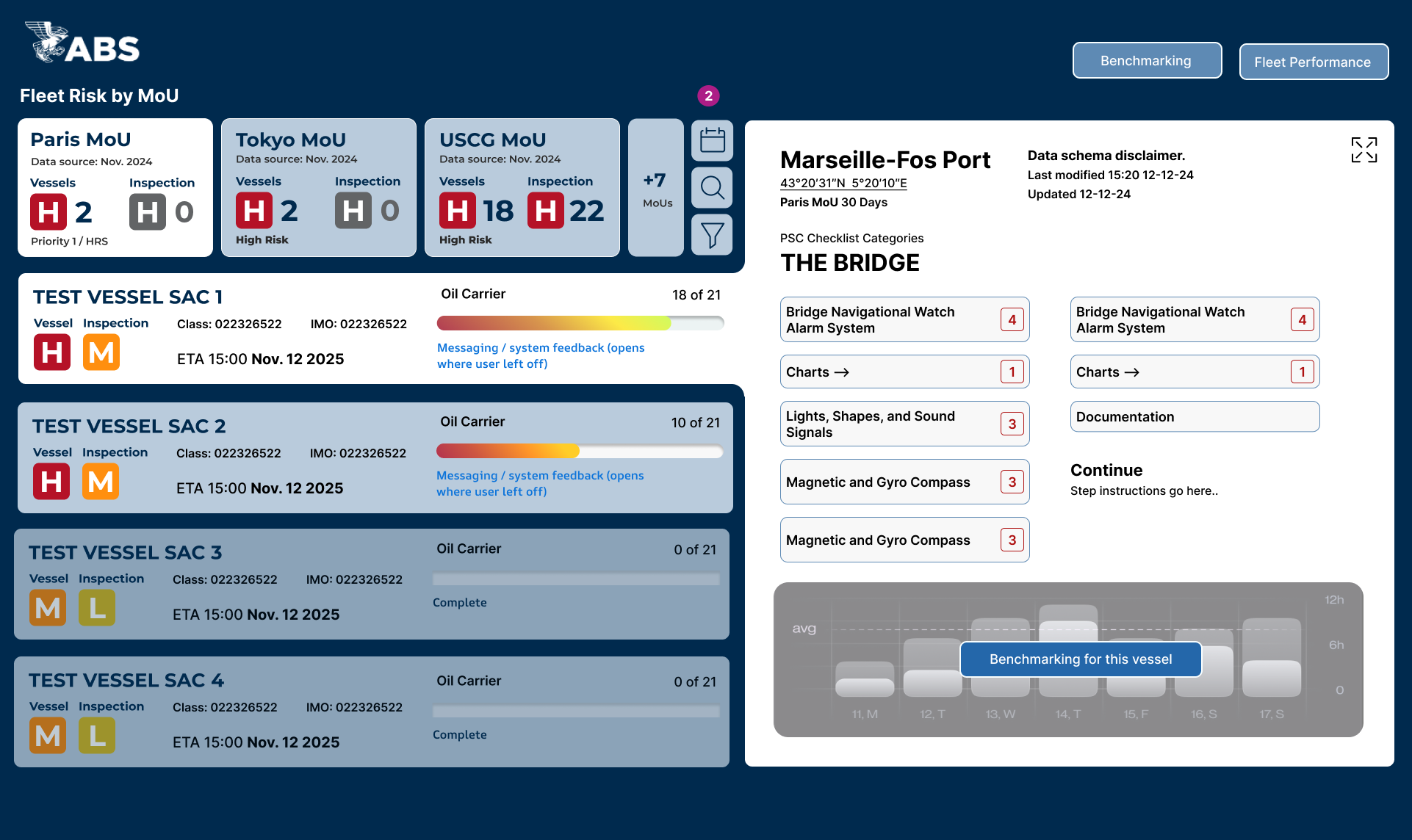
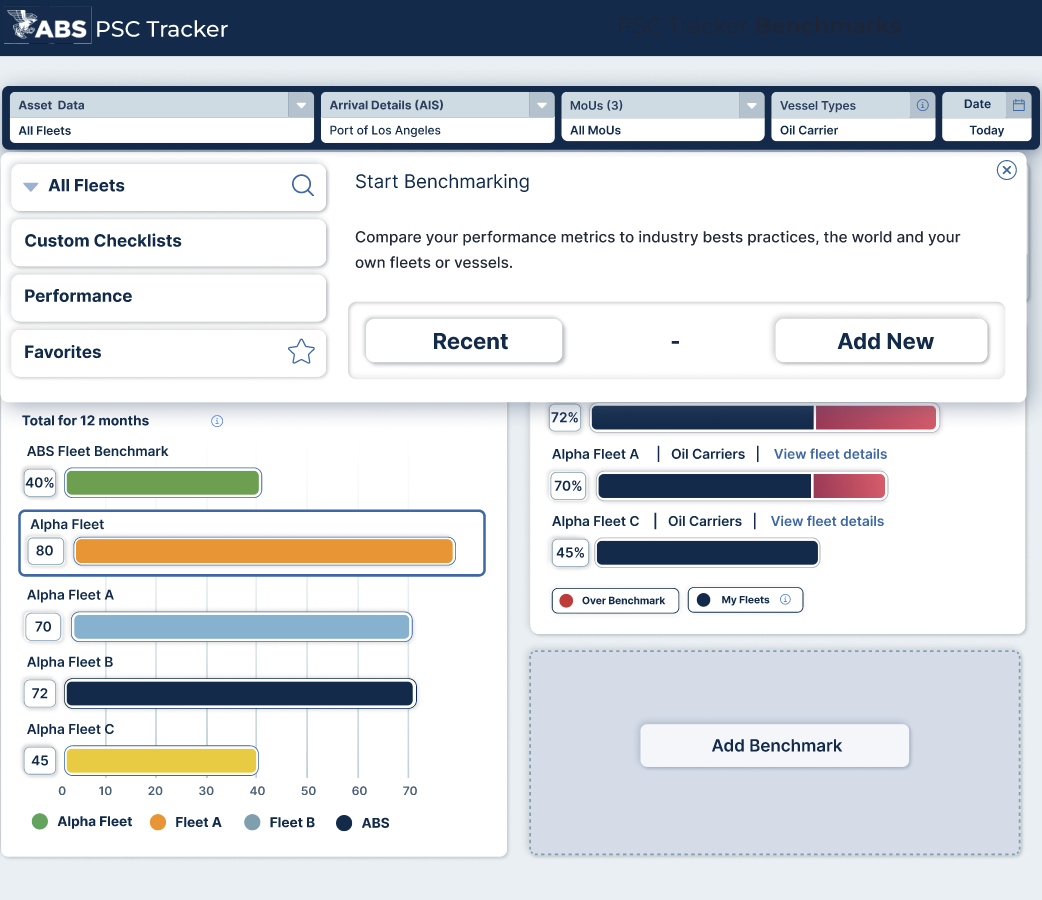
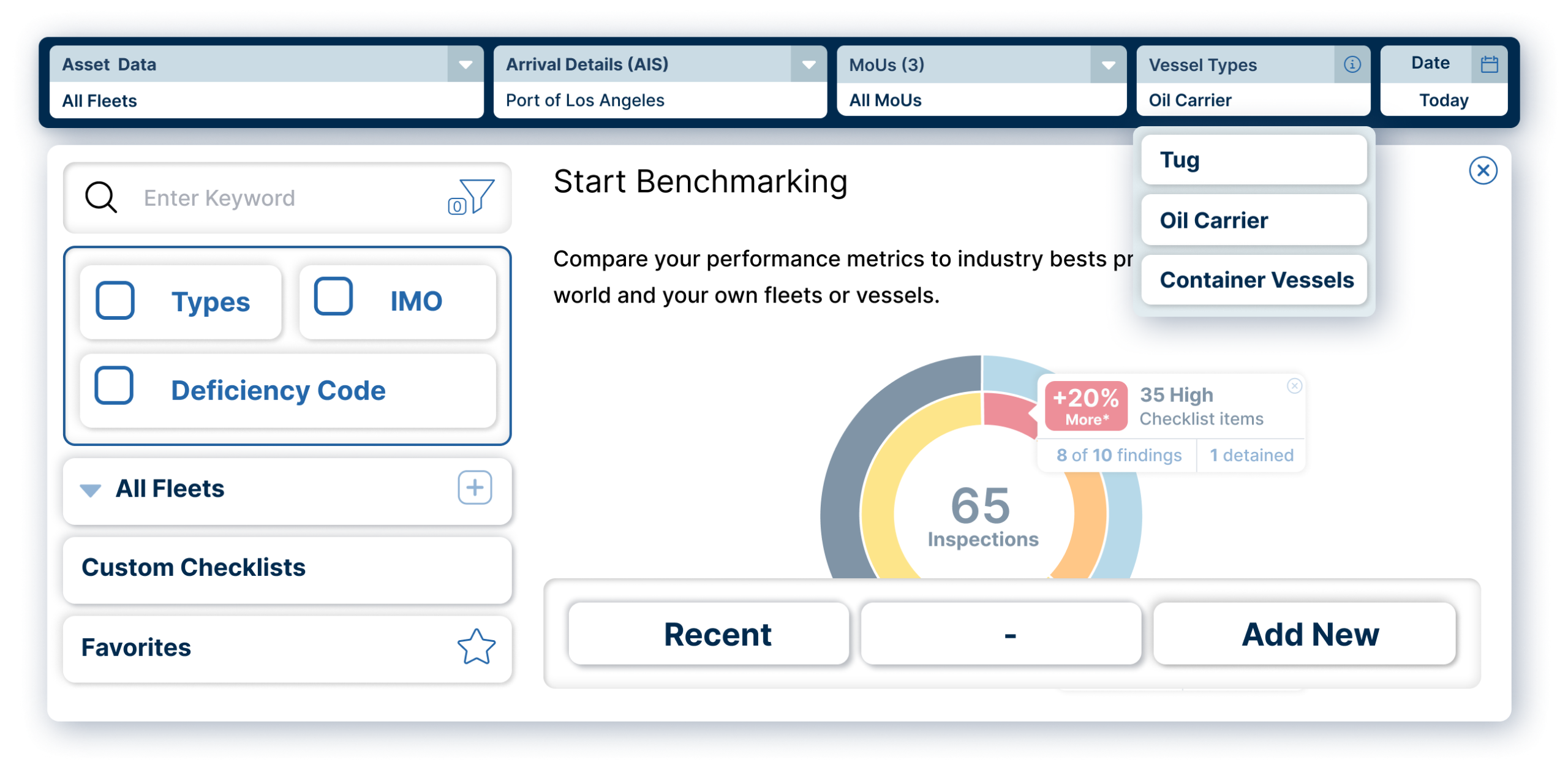
Early Ideation WireframesIn this example, MoUs represent the port authorities requirements to dock. I believe that UI styling and design is a critical part of UX flows. Often, I create hi-fidelity wireframes that leverage UI styling to enhance usability, as well as, UX flows. I used them for the initial ideation with stakeholders to help shape the feedback. UI styling done well can help clarify UX flows substantially and needed to be introduced at an early stage. Designing without these visual cues can make simple flows more complex. This can sometimes move things along quicker. Research |
|
|
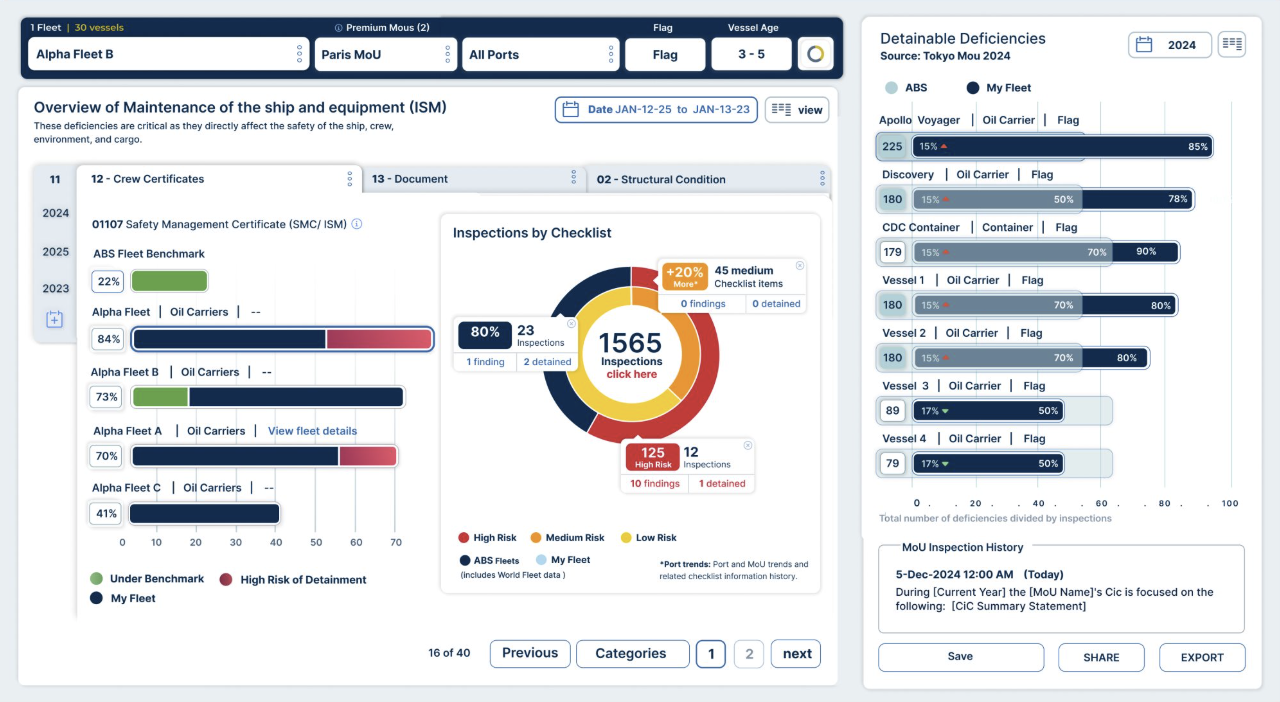
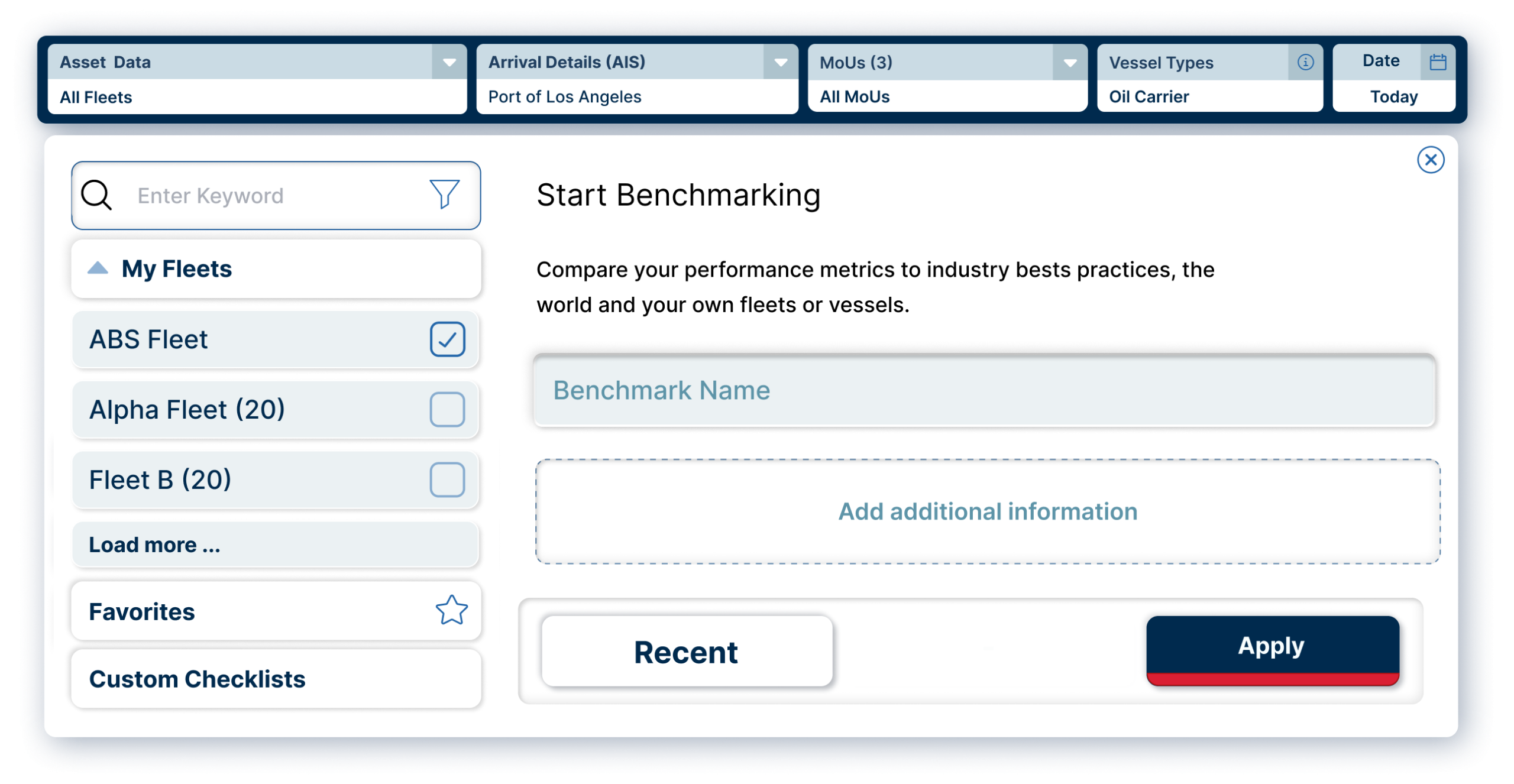
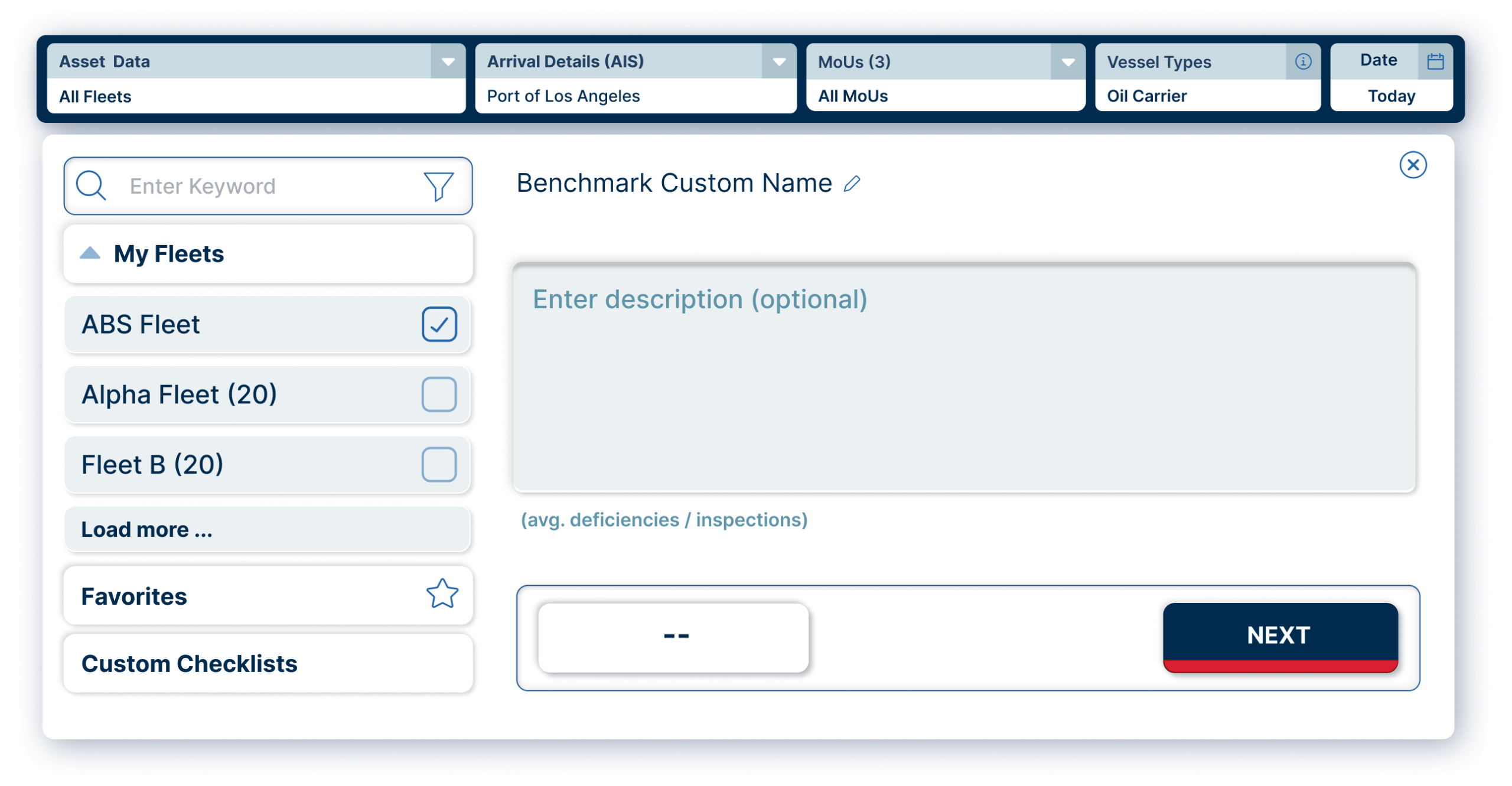
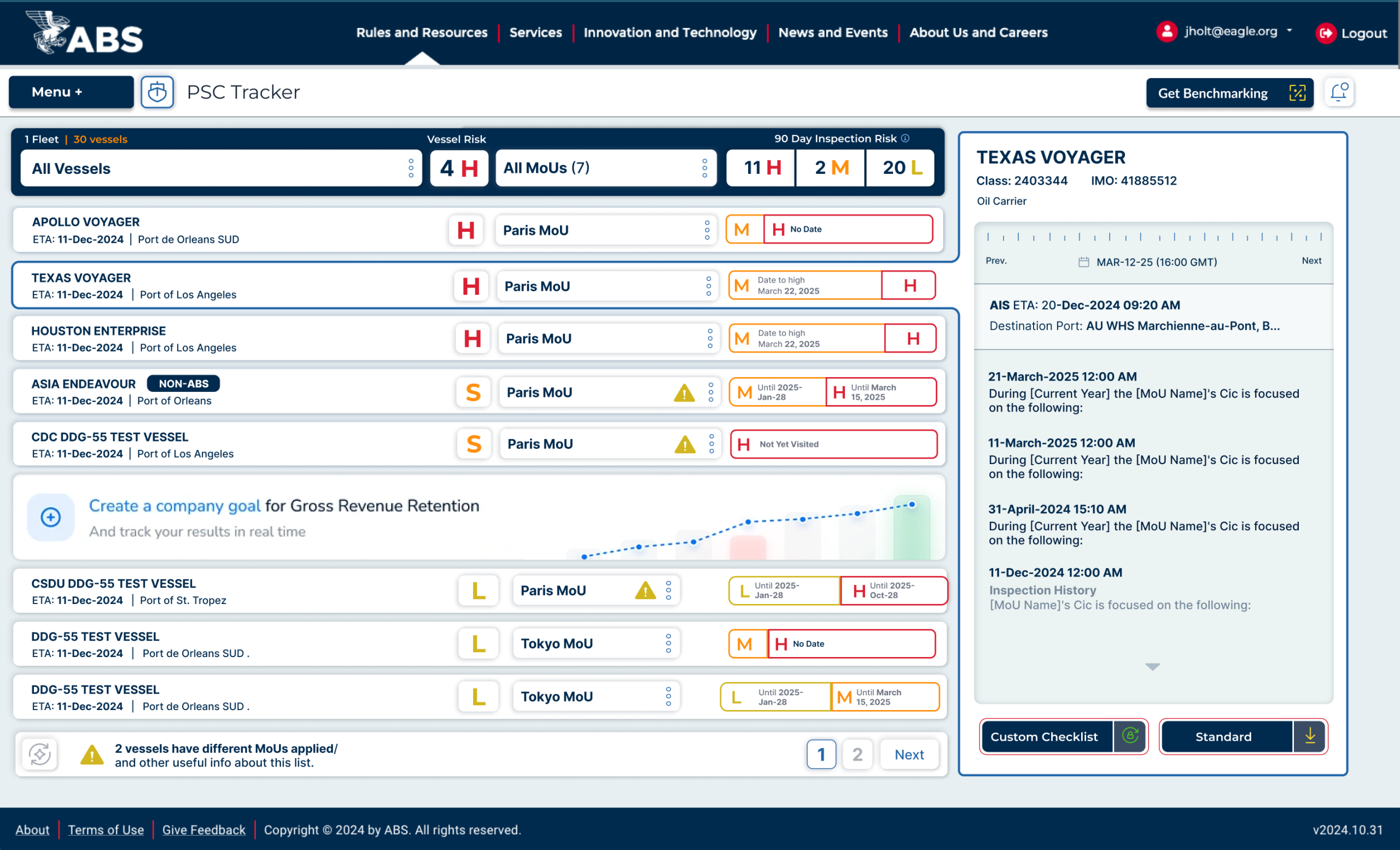
UI StylingUI Styling is matching some previous styling, although it was incomplete. Designed for touch these patterns are mobile first. I identified that the styles were not consistent across the company and that brand style guidelines leaned more towards graphic design and print materials. So, the match was mostly white, with a soft touch. The focus blue outline becomes more prominent against the soft UI background allowing for faster eye tracking of activity on the page using focused areas. They can move twice as fast with touch or cursor. I designed this Port State Control application to match the ABS current styling, however I needed to expand its complexity to be more effective. We eventually refined the styling to be more sleek like the following examples, but had to match other styling cues in the legacy app – I helped make the brand styling a little more robust to accommodate new modular designs.
|
New Free Version
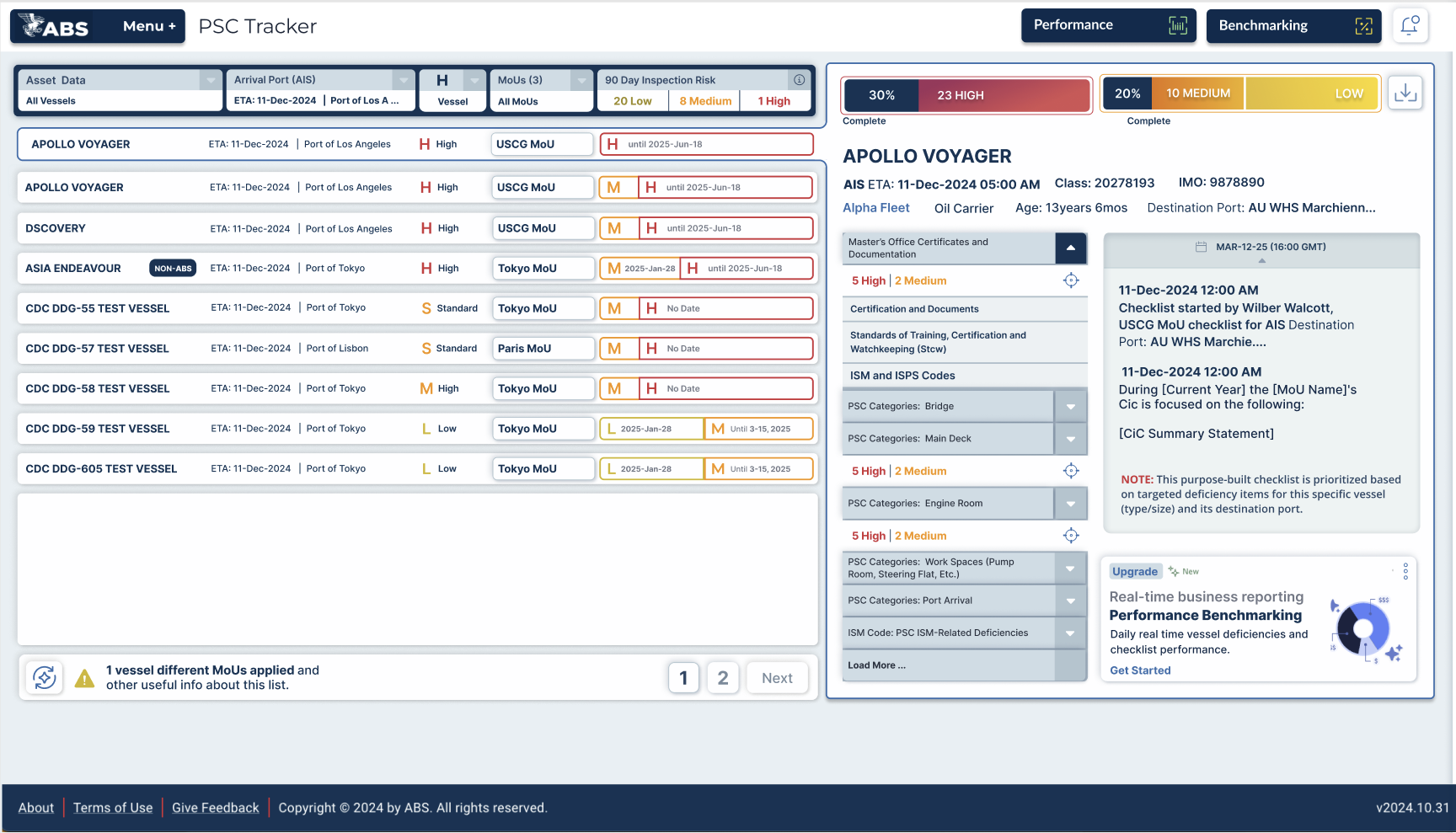
Upgraded version
Outcomes & Takeaways
|
The SaaS redesign delivered more than usability improvements — it created measurable value for both operators and ABS as a business. Operational ROI: Inspection prep time dropped 35%, from 43 minutes to 28 minutes and task success rate improved from from 68% to 92%. Time Savings Per Inspection: Each operator now saves roughly 15 minutes per inspection. When multiplied across a fleet, that translates into significant annual cost reductions, reinforcing the SaaS subscription’s value and return on investment. |
Strategic Positioning: By converting a free, low-value tool into a personalized SaaS experience, ABS could potentially unlocked new recurring revenue and be rebranded as a digital-first leader in maritime integrity management. ABS has became the first maritime authority to offer AI-powered, risk-based inspection prioritization, creating a new product category in maritime software. Keeping that postion will be the future challenge. Competitive Advantage: With 92% task accuracy and 71% operator purchase intent, the offering stands out in a risk-averse industry, proving that data-driven, user-centered design can power business differentiation and scalable growth. |
Custom Checklist
Used on a tablet in-field, user taps to checkoff. This is an admin view for desktop.
These serve as audits for ABS inspectors as well, to assist in port inspections if needed.
These could save thousands for shipping companies.