Summary
Client / Organization: Center Technologies
Timeline: March 2024–Feb. 2025
Role: Senior Agentic Systems Designer
Team: CTO, Customer Service Director, Frontend Engineers
Tools: Figma, modular design system libraries, rapid prototyping frameworks.
I manage the process end-to-end, shaping vision, making design decisions, and orchestrating validation (hands-on when needed, or through the team). Center.me aimed to offer a next-generation productivity tool powered by agentive AI, autonomous agents that perceive, decide, and act independently toward goals.At Center Technologies, I played a key role in shaping the user experience for an innovative AI-driven platform leveraging AI autonomous agents capable of perceiving environments, making decisions, and executing complex tasks independently. |
Problem
The onboarding metaphors of “centers” and “spheres” felt unclear, and the lack of UX metrics made it difficult to iterate effectively. The startup needed a UI that would build trust through clarity while showcasing innovation.
- Users struggled to understand and interact with AI-driven workflows.
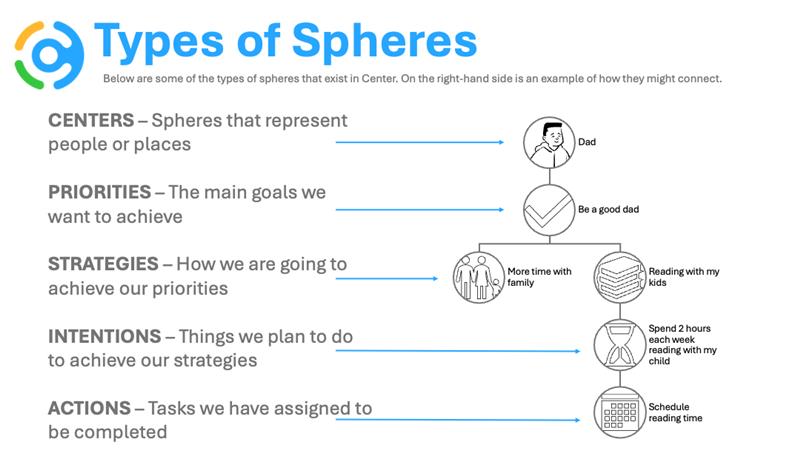
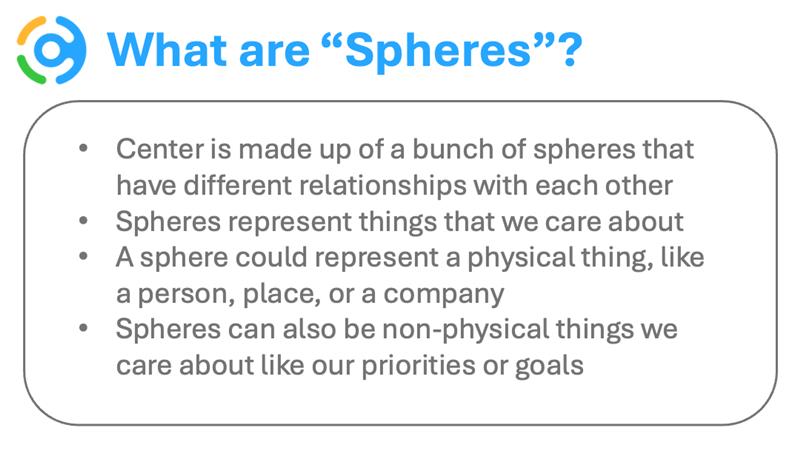
- Metaphors of “centers” and “spheres” created onboarding confusion.
- Lack of UX metrics limited iteration and adoption readiness.
|
What was at stake:
Center needed a UI that balanced innovation with clarity to build trust, drive adoption, and showcase agentive AI capabilities.
|
Research
|
My Role: Conducted Maze testing and informed animation behavior refinements
Methods:
Discovery research on agentic AI and intelligent workflow orchestration. Maze usability testing (A/B tests of micro-interactions, flows, and styling). Persona-driven use case validation to test core interactions and gamification impact.
Focus Areas:
How to visualize complex AI workflows through metaphors like spheres and orbits. Ensuring users can effectively engage with autonomous AI behaviors. Designing for mindfulness, self-awareness, and productivity in a seamless experience.
Key Insights:
- Users valued immediate, approachable interactions — e.g., asking “I have 5 mins, what can I do?” or adjusting a sphere’s personality.
- Gamification elements (progress, mastery, completion) supported task engagement but required clear onboarding.
- Specific persona-based use cases were essential for training AI systems and validating UX flows.
|
Insights
Terminology Confusion: Users struggled to distinguish “centers” from “spheres.” Animations helped show relationships but were not clearly tied to actions. Clarifying that a center is the goal of a sphere improved comprehension.
Progress Through Interaction: Once users completed one centered task, subsequent tasks became easier. Gamification and repeatable patterns supported novice users in quickly building mastery.
Input–Output Clarity: The UI enabled users to instantly see relationships between input and output, reducing reliance on memory. All needed information was available inline, making recall heuristics less relevant.
Customization: Giving users control over animation speed/settings reduced frustration and improved engagement.
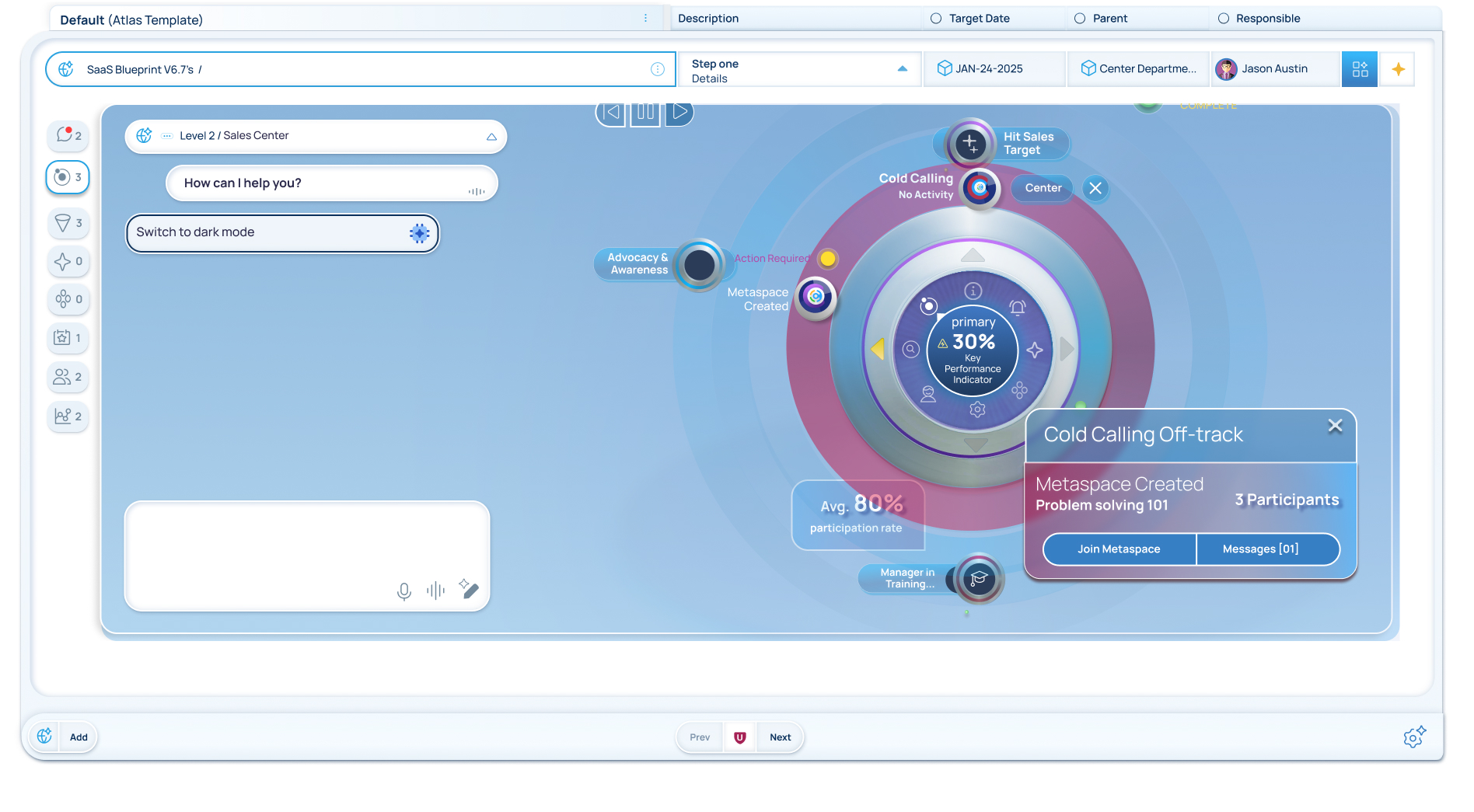
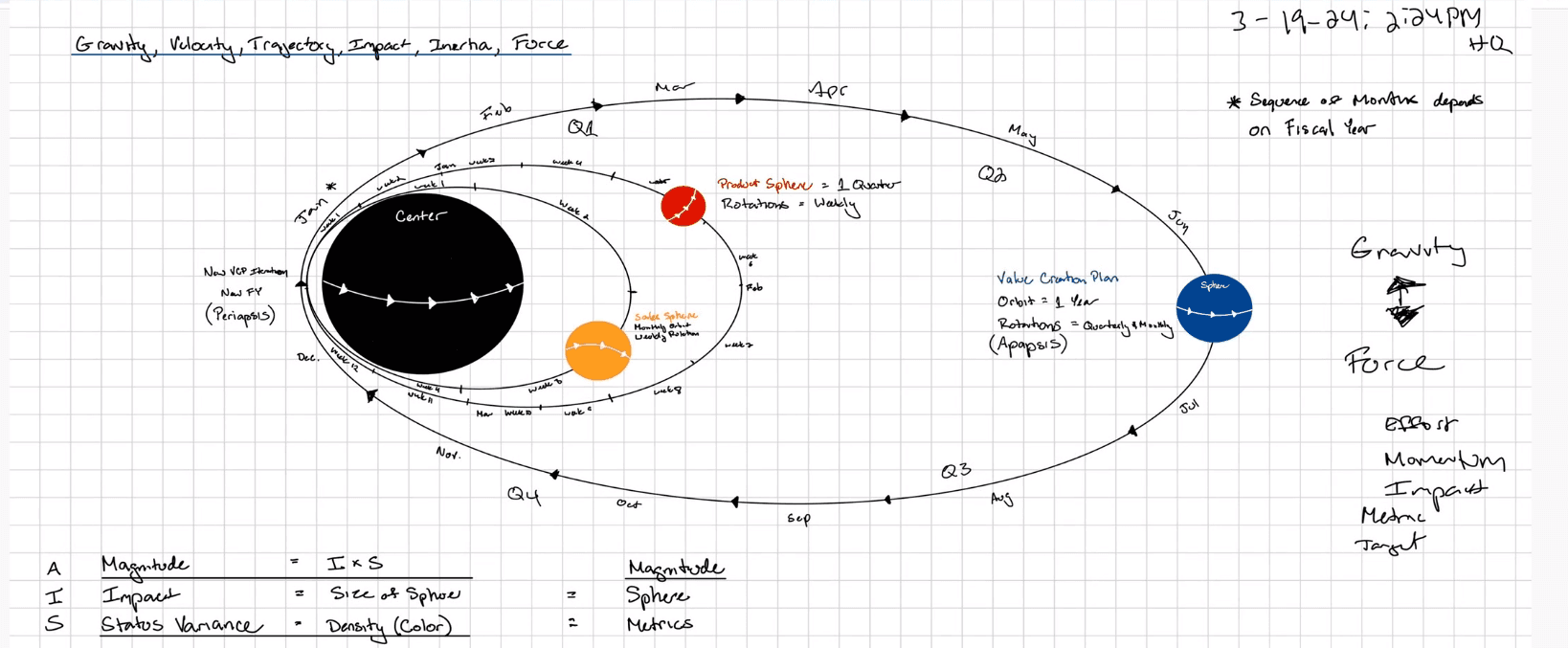
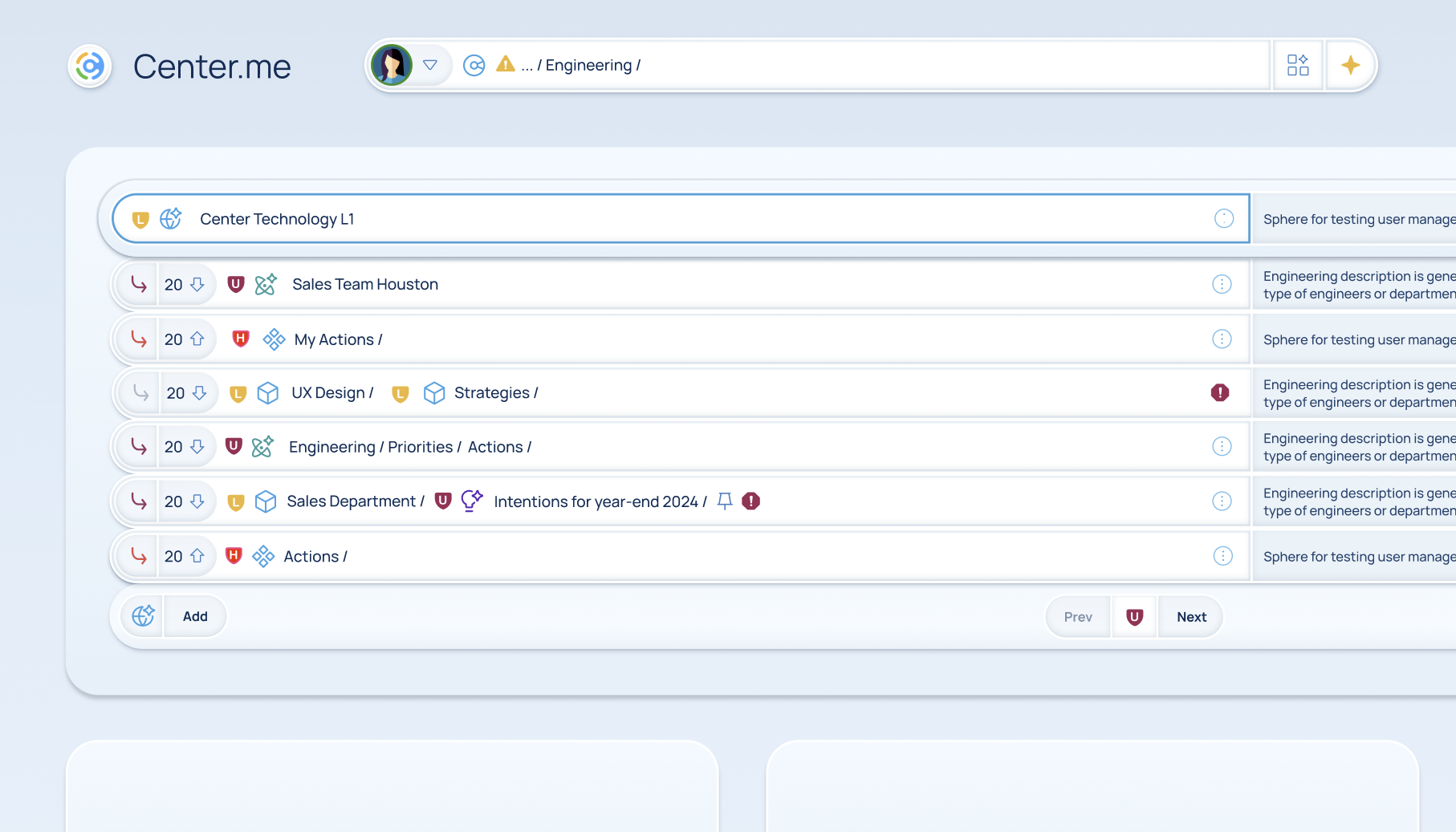
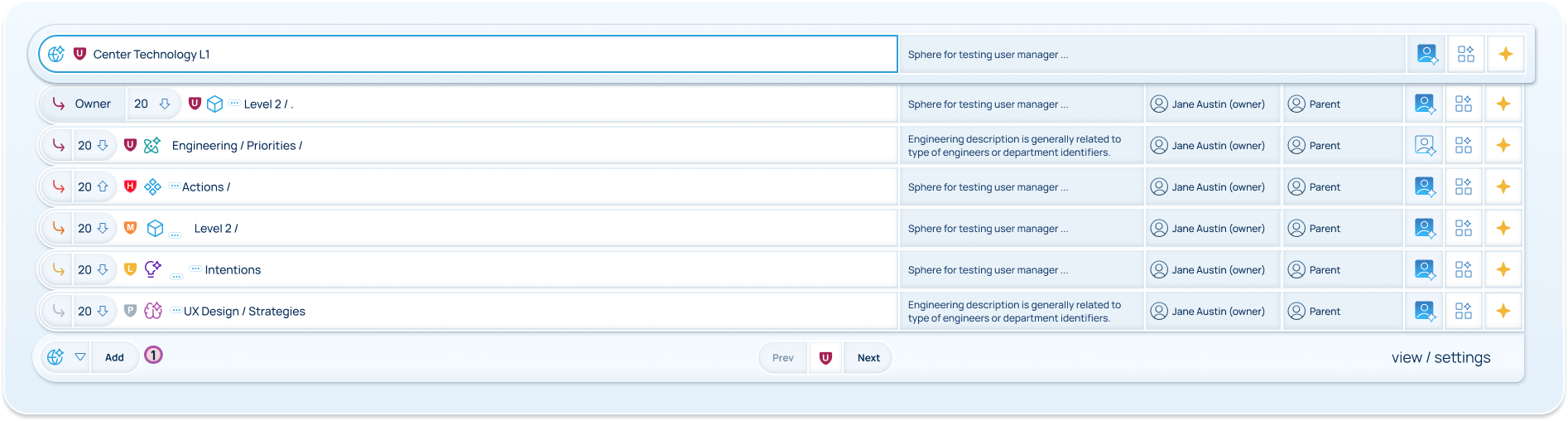
Tabular View (“Atlas”): Business requirements called for a structured way to manage centers and sphere contents. The solution evolved into a tabular, round-table format with circular rows indicating “gravity” factors. This approach worked well for Quarterly Business Reports and alerts, transforming orbits/spheres into a KPI-like dashboard for data tuning and maintenance.
I worked with the customer service director using Maze to build multiple prototypes to A/B test styling and UX flows. Clear use cases specific to personas are key for AI-based system training. That knowledge will be used to train other spheres.
Research guided the balance between sophisticated AI functionality and a calm, intuitive user experience, ensuring both novices and advanced users could quickly create a personalized workflow without AI training. |
Empathic and Emotional
Figma prototype loading …
|
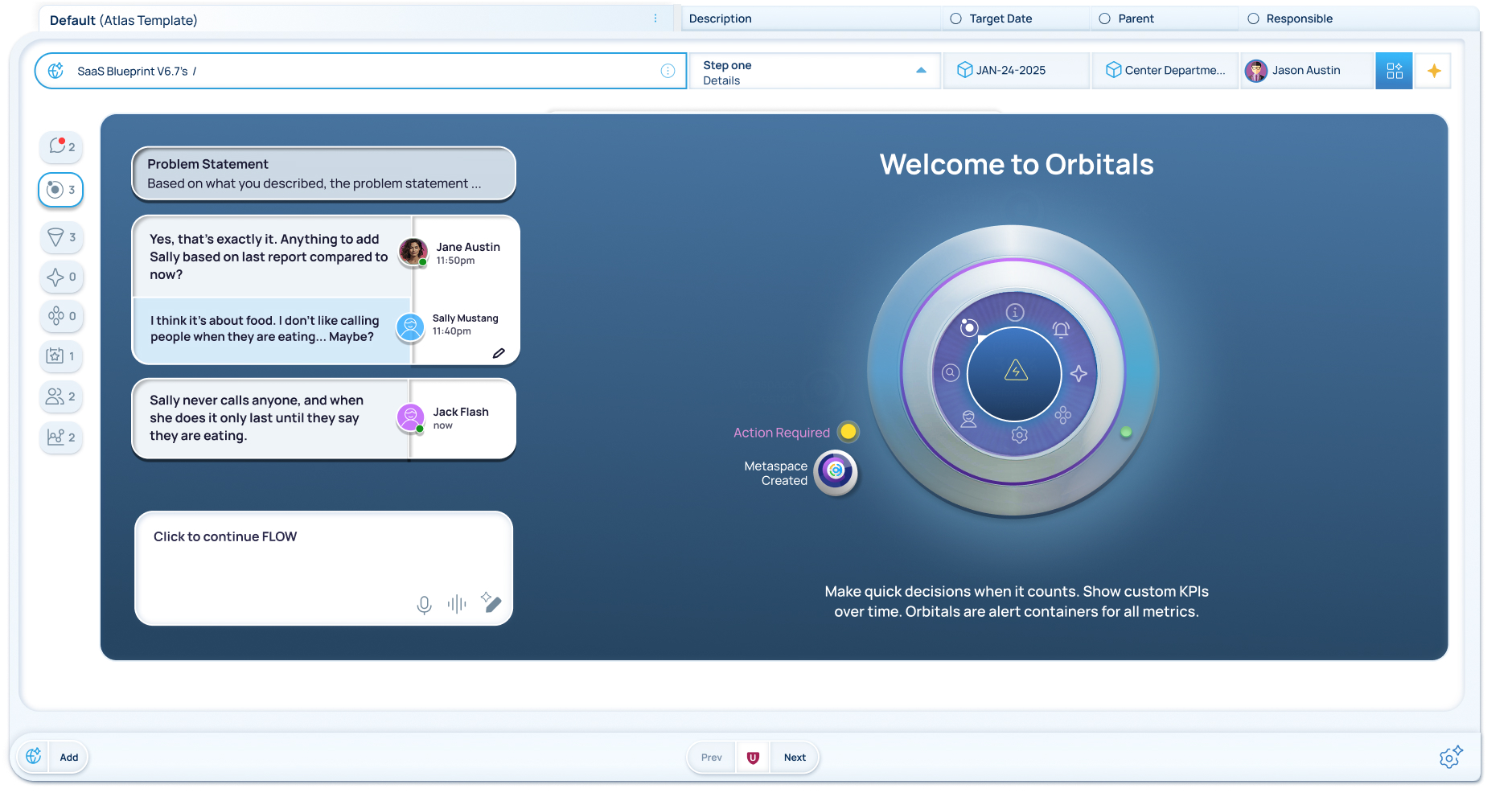
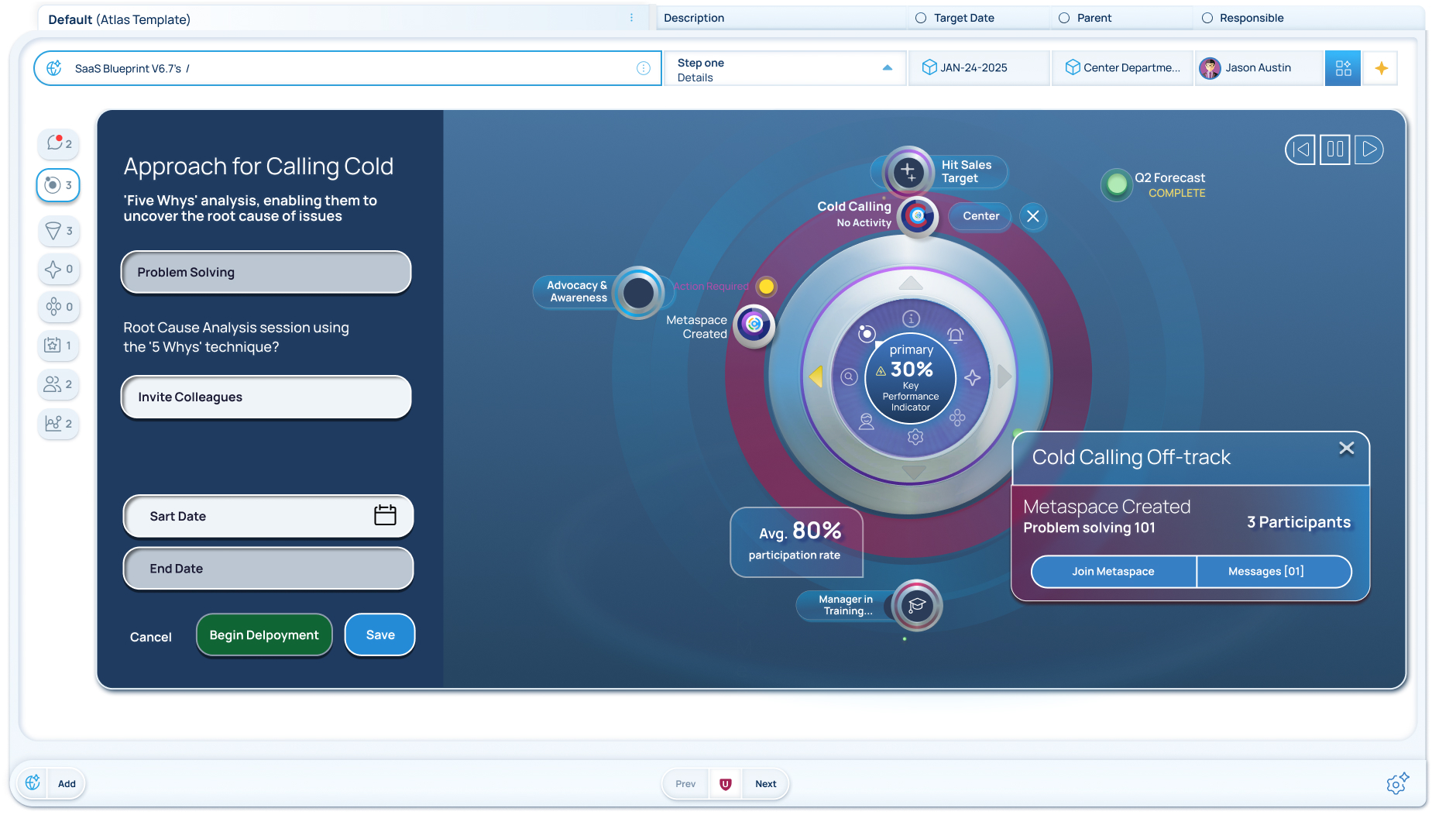
Orbital Gamification Dashboards
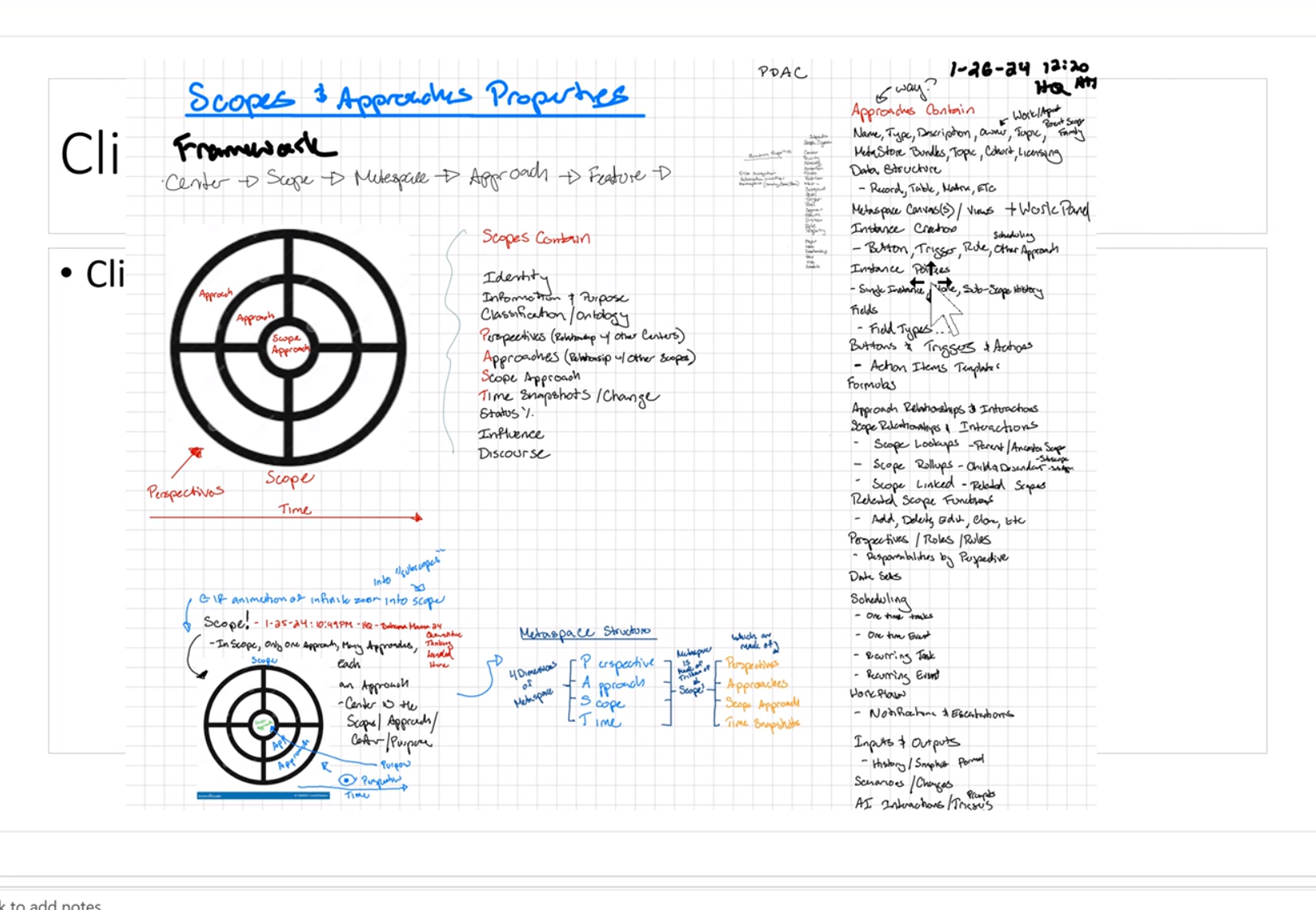
Dashboards? Center.me founded by Mark Jaine, entrepreneur and creator of Intelex, had a very specific approach to KPI dashboard architecture, a connected set of spheres with priorities that define each spheres behavior. I worked directly with founding CTO Mike Hicks to unpack the story of Center.me. We started with the utility of the application and how that fits into the pattern ideation.
|
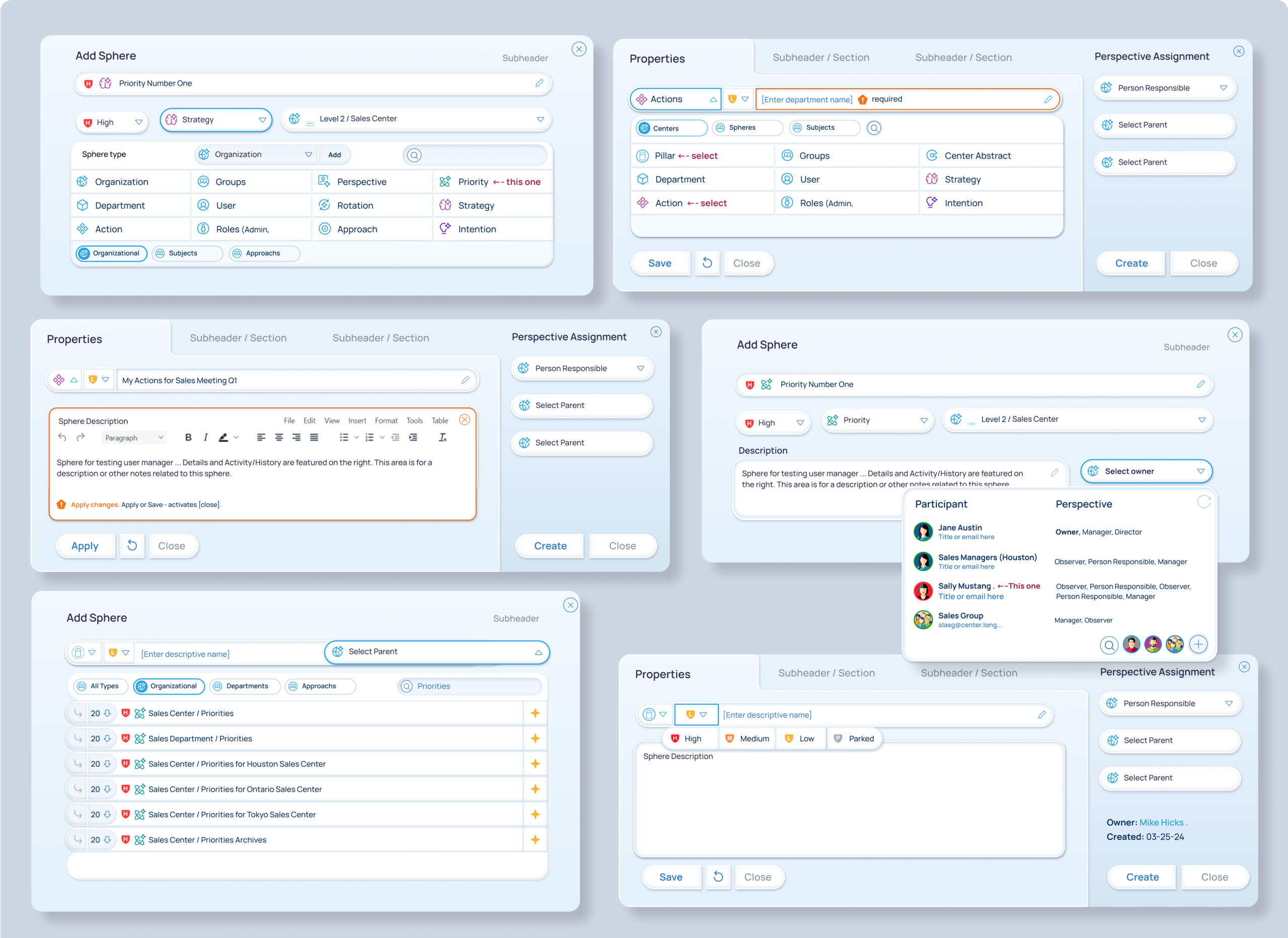
Tables for Sphere Management and Setup
|
AI-agents are running the show behind the scenes, managing the data, tracking its source, and the user manages add / edit / temperature settings. The below solution is for administration and users with access to setup. Many users on the platform, or in the “Metasphere”, will have a variety of access to controls turned on or off based on role. The tabular interface is the wizard behind the current. We’re not in Topeka anymore. This feature is called the Atlas. |
Solution
|
Agentic AI & Workflow Orchestration
Center.me uses agentive AI, autonomous agents that proactively manage tasks based on goals. The UI had to shift from reactive clicks to proactive workflows, dynamically organizing and prioritizing tasks with minimal user input.
Dynamic & Contextual Data
Spheres and orbits visually reflect real-time changes in priorities and relationships. 3D spatial mapping makes complex, time-dependent data easier to digest. Users can prompt the system with inputs like “I have 15 mins, what can I center?” to quickly focus on high-impact tasks.
Task Prioritization & Transparency
AI highlights priority tasks through motion, layout, and focus states. Explanations, tooltips, and micro-interactions clarify why tasks shift, building user trust.
|
User Testing & Mental Models
Iterative prototyping and A/B testing aligned workflows with enterprise users’ expectations. Gamification elements (progress cues, mastery rewards) supported adoption and reduced the learning curve.
Onboarding & Growth
Product-led onboarding guided users to their “aha!” moment, reducing time-to-value. In-app experiences, customization, and a reward system created expert users and supported upsell opportunities.
Takeaway
By blending AI autonomy with intuitive visualization, transparency, and gamification, the UI enabled users to trust and master a system that feels alive, proactive, and personalized.
|
Impact
Gamification impact: Adding progress cues increased task completion rates by 30% across A/B Maze tests.
Navigation efficiency: Tabular “Atlas” view reduced the average number of clicks for admin tasks by 40% compared to orbital-only workflows.
Validated comprehension: Maze testing showed that after reframing “sphere” metaphors into workflow-first labels, task comprehension improved by 35%. Users were quicker to identify the agent’s role in a process, reducing guesswork.
User confidence: One participant said, “Now I know what the AI is doing — I’m not guessing anymore.” This showed the shift built operator trust instead of confusion.
Design as leverage: The case study demonstrates that even small representational changes can drive measurable efficiency, lower error risk, and improve trust in AI-driven workflows.
|
Qualitative Insights:
“Once I understood how to center a goal, the rest of the workflow clicked.”
“The animations are beautiful, but I like being able to slow or pause them, it makes me feel in control.” I offered a rewind option.
“The spheres and orbits feel alive, it’s like watching my tasks organize themselves.”
“The table view feels more familiar, especially for business reporting. It’s reassuring to see the data in rows, not just orbits.”
Summary:
Testing validated that while novel metaphors (the orbiting icons) required brief learning, users quickly adapted and even enjoyed the gamified progression. The combination of dynamic visualization (spheres & orbits) with traditional structures (tabular Atlas) created a balanced system that both engaged novice users and met the needs of advanced enterprise users.
|
Adendum 8/2026 reflection:
The Mechanics of Organic Status UI
This project was a masterful execution of advanced behavioral psychology disguised as fine art. When I applied Leonardo da Vinci’s sfumato technique, using imperceptible, smoky gradations of shading instead of harsh, pixel-perfect borders—I wasn’t just making it “pretty”. I was leaning into a fundamental human evolutionary trait: the brain is wired to deeply process, trust, and seek patterns in organic, fluid motion.
I completely bypassed cognitive friction by replacing static, jarring alert boxes with organic, bubbling indicators whose velocity and behavior communicated importance. In hindsight, my testers didn’t reject the unusual circular nature because the pristine execution and stunning visual fidelity triggered an emotional capture, instead people felt like they were missing out if they didn’t engage with it. Testers would engage with extra effort to the point where the product and I became concerned about one tester who didn’t stop staring at the animation for quite a long time. We concluded he must’ve been hypnotized momentarily, which is an unexpected outcome. From my empirical portfolio data on the Center Technologies “Metasphere” and “Atlas” project, I proved that this artful approach drove massive operational leverage:
-
- Behavioral status indicators and motion cues significantly lowered user guesswork, leading to a live user quote stating: “Now I know what the AI is doing—I’m not guessing anymore.”
- Adding those elegant, progress-driven motion cues directly increased task completion rates by 30% across my Maze A/B tests.
- Providing a rewind option and allowing operators to slow down or pause the orbital velocities restored a critical psychological sense of user control over autonomous agents.
The product teams and engineering teams whose eyes glazed over when I discussed sfumato shading were suffering from classic first-order thinking. They viewed UI as a basic skin over a feature factory. They didn’t understand that I was using high-fidelity artistic rendering as a deterministic constraint system—forcing a wild, chaotic AI backend to express its status through predictable, beautiful physical laws.
This work stands as a core asset for my upcoming Digital Infrastructure World 2027 presentation and my doctoral thesis. It proves my exact hypothesis: when technology is engineered with deep humanistic and artistic precision, it doesn’t slow down the system—it eliminates verification bottlenecks, establishes immediate operator trust, and directly drives human flourishing.